Advanced Sapphire FUE Hair Transplant: 4,500 Grafts for Grade 5 Hair Loss – Real Patient Case Study
Case Overview
Hair loss that begins in the early twenties can often progress steadily despite medications and non-surgical treatments. This case study highlights the journey of a 31-year-old male patient who sought a permanent solution for advanced hair loss after experiencing limited success with medical therapy and PRP treatment.
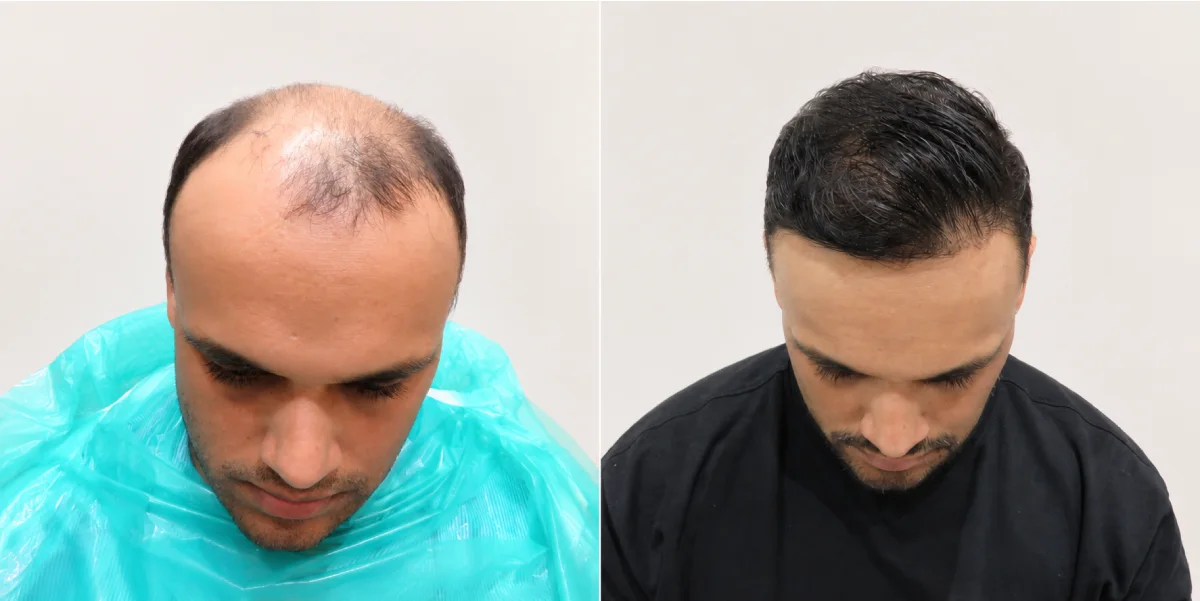
Following a detailed scalp evaluation at Harleys Hair Transplant Clinic, the patient was diagnosed with Grade 5 androgenetic alopecia and underwent an Advanced Sapphire FUE Hair Transplant performed by Dr. Sumit Agrawal. Using approximately 4,500 grafts and nearly 10,000 hair follicles transplant, the procedure successfully restored the frontal hairline, temples, mid-scalp, and a significant portion of the crown. By the eighth month, the patient had already achieved substantial improvement in coverage and density.
Patient Profile
| Parameter |
Details |
| Age |
31 Years |
| Gender |
Male |
| General Health |
Healthy |
| Duration of Hair Loss |
Approximately 10 Years |
| Previous Treatments |
Medical therapy and PRP |
| Family History |
Father with genetic hair loss |
| Diagnosis |
Grade 5 Androgenetic Alopecia |
The Patient's Concern
The patient had been experiencing progressive hair loss since his early twenties. Initially, the condition presented as a mild hairline recession, but over the years it progressed to involve the temples, frontal scalp, mid-scalp, and crown.
Although he had previously undergone medical treatments and PRP therapy, the improvement was limited, and the overall density continued to decline. His primary objective was to restore a fuller appearance while achieving maximum scalp coverage through a long-term solution.
Clinical Assessment and Diagnosis
A comprehensive scalp evaluation was performed using Folliscope analysis to assess the extent of hair loss, donor area quality, follicular density, and future hair restoration possibilities.
The assessment revealed:
- Advanced frontal hairline recession
- Significant temple loss
- Mid-scalp thinning
- Crown involvement
- Strong donor area density
- Positive family history of androgenetic alopecia
Based on the findings, the patient was diagnosed with Grade 5 androgenetic alopecia, a stage where hair loss affects multiple scalp regions and often requires a higher graft count to achieve meaningful coverage.
Treatment Planning
Following the assessment, a customized treatment plan was created to address both the patient's current hair loss and long-term aesthetic goals.
Treatment Objectives
- Reconstruct a natural-looking frontal hairline
- Restore temple definition
- Improve density in the mid-scalp
- Address crown thinning
- Achieve balanced and natural scalp coverage
To meet these objectives, Dr. Sumit Agrawal recommended an Advanced Sapphire FUE Hair Transplant with an estimated requirement of 4,000–4,500 grafts.
Given the extent of baldness, a strategic combination of scalp and beard donor hair was planned to maximize coverage while preserving donor area aesthetics.
Why Sapphire FUE Hair Transplant Was Chosen
For patients with advanced baldness, precision and graft survival play a crucial role in determining the final outcome.
The Sapphire FUE Hair Transplant technique was selected because it offers:
- Precise recipient site creation
- Enhanced graft placement accuracy
- Minimal tissue trauma
- Faster healing
- Natural hairline design
- Improved cosmetic density
Compared to traditional methods, a Sapphire blade hair transplant allows surgeons to create finer and more controlled channels, helping achieve natural-looking results even in larger restoration cases.
Procedure Details
Following routine pre-operative blood investigations and medical clearance, the procedure was scheduled over two sessions.
Technique Used
Advanced Sapphire FUE Hair Transplant
Donor Areas Utilized
- Scalp donor area
- Beard donor area
Total Grafts Implanted
Approximately 4,500 grafts
Estimated Hair Follicles Transplanted
Approximately 10,000 hair follicles
Areas Restored
- Frontal hairline
- Temple regions
- Mid-scalp
- Significant portion of the crown
The grafts were carefully distributed to prioritize natural density in the frontal region while ensuring balanced coverage across the remaining scalp.
Recovery and Post-Procedure Progress
First Week
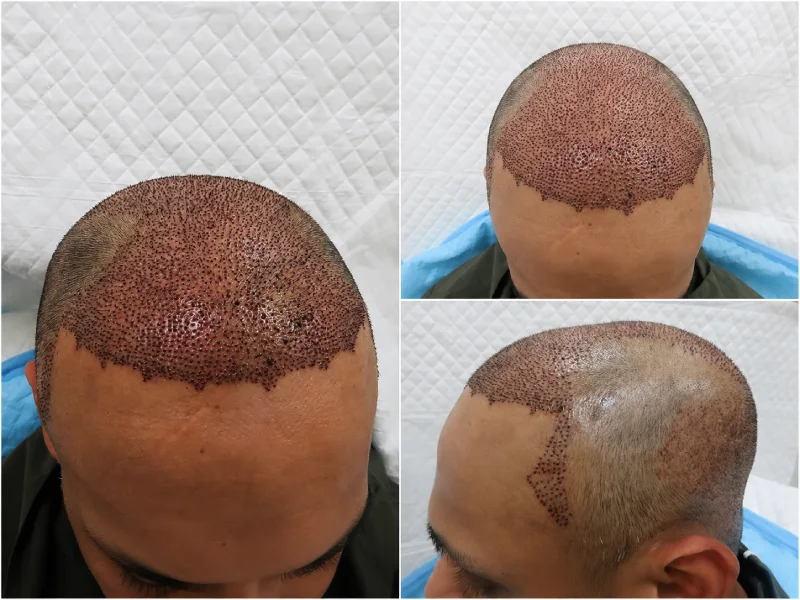
The healing process was smooth with only mild swelling and redness. Scab formation occurred as expected and gradually resolved during the initial recovery phase.
One Month
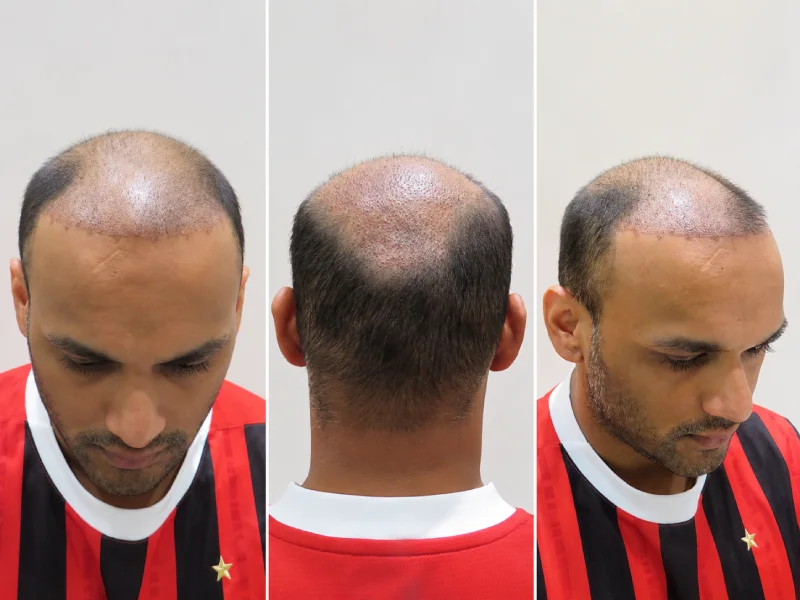
The patient experienced temporary shedding of transplanted hairs, commonly known as shock loss. This is a normal stage of recovery and indicates that the follicles are entering a new growth cycle.
Three to Six Months
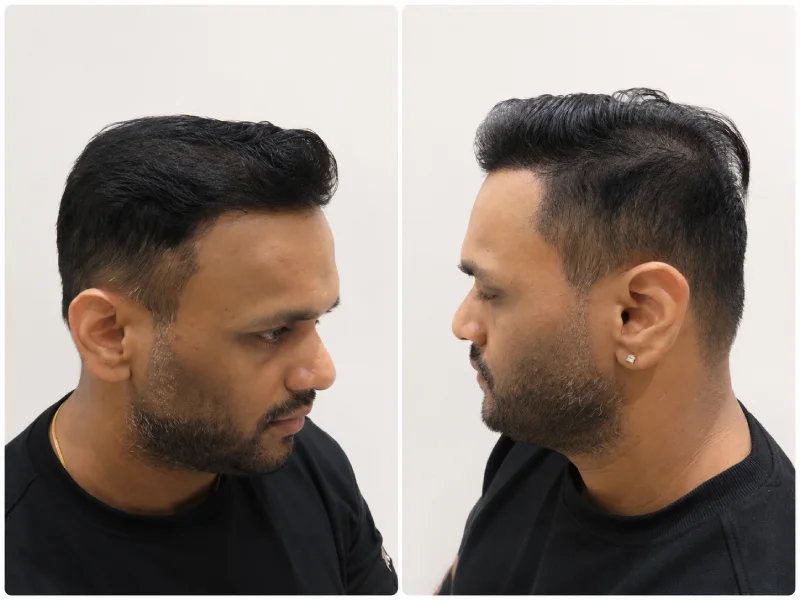
New hair growth became increasingly visible. The patient reported gradual improvements in density and coverage, particularly in the frontal and mid-scalp regions.
Eight Months
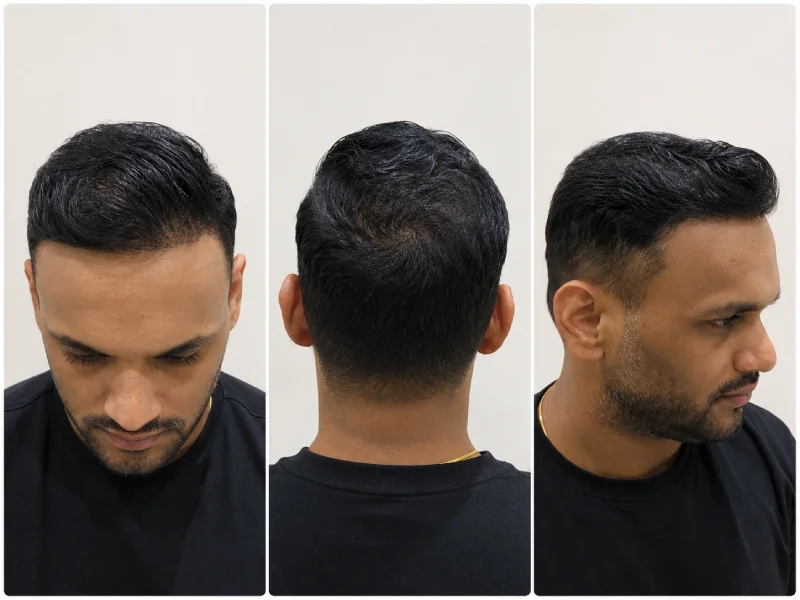
By the eighth month, significant hair growth had developed across the treated areas. Density continued improving, and the restored hairline appeared natural and well-defined.
Results at 8 Months
At the eight-month follow-up, the patient demonstrated:
- Excellent frontal hairline restoration
- Improved temple density
- Significant mid-scalp coverage
- Noticeable crown improvement
- Natural hair growth pattern
- Increased overall scalp coverage
The frontal and mid-scalp regions showed particularly strong density gains, resulting in a dramatic improvement in appearance and confidence.
Although further maturation and thickening are expected over the coming months, the patient had already achieved a substantial transformation by Month 8.
Key Clinical Highlights
- Grade 5 hair loss successfully addressed through Advanced Sapphire FUE Hair Transplant
- Approximately 4,500 grafts transplanted
- Nearly 10,000 hair follicles implanted
- Combined scalp and beard donor strategy utilized
- Significant cosmetic improvement achieved within 8 months
- Natural-looking hairline and density restoration
- Smooth recovery with no major complications
Expert Insight from Dr. Sumit Agrawal - The Best Hair Transplant Surgeon in Mumbai
According to Dr. Sumit Agrawal, advanced hair loss cases require far more than simply transplanting a large number of grafts. Success depends on careful donor area management, strategic graft allocation, realistic planning, and designing a restoration pattern that continues to look natural in the years ahead.
In this case, combining scalp and beard donor hair allowed for enhanced coverage while maintaining donor area integrity. The outcome demonstrates how personalized treatment planning can help patients with Grade 5 hair loss achieve significant and natural-looking restoration.
Considering a Sapphire FUE Hair Transplant?
If you are experiencing progressive hair loss, have not achieved satisfactory results with medications or P-R-P therapy, or are looking for a long-term solution for advanced baldness, a professional assessment can help determine your suitability for hair transplantation.
At Harleys Hair Transplant Clinic, every patient undergoes a detailed consultation with Dr. Sumit Agrawal, where factors such as hair loss pattern, donor area quality, future hair loss progression, and aesthetic goals are carefully evaluated before creating a personalized treatment plan.
Whether you are exploring a Sapphire FUE hair transplant, want to understand the graft requirement for your stage of baldness, or are looking for a reliable solution for genetic hair loss, booking a consultation can be the first step towards restoring both your hair and confidence.
 +91 9967333879