Medically Reviewed by Dr. Sumit Agrawal | Published on Jul, 20 2026
Beard Hair Transplant: Technique, Graft Count, Cost, and What to Expect
A well-defined beard has become much more than a fashion statement. For many men, it enhances facial symmetry, creates a stronger jawline, and adds to their overall confidence. However, not everyone is naturally blessed with a full, evenly growing beard. Genetics, hormonal factors, scars, burns, previous surgeries, or patchy facial hair can make it difficult to achieve the desired beard style.
While beard oils, serums, and supplements often promise fuller growth, they can only work if healthy hair follicles already exist. When facial hair follicles are absent or inactive, a beard hair transplant is the most reliable and permanent solution.
At Harleys Hair Transplant Clinic, Dr. Sumit Agrawal performs advanced beard restoration using the latest Follicular Unit Extraction (FUE) technique. Every procedure is meticulously planned to recreate natural density, growth direction, and facial proportions, ensuring that the transplanted beard looks like it has always been yours.
If you're considering facial hair restoration, understanding the technique, graft count, recovery, and costs can help you make an informed decision.
What Is a Beard Hair Transplant?
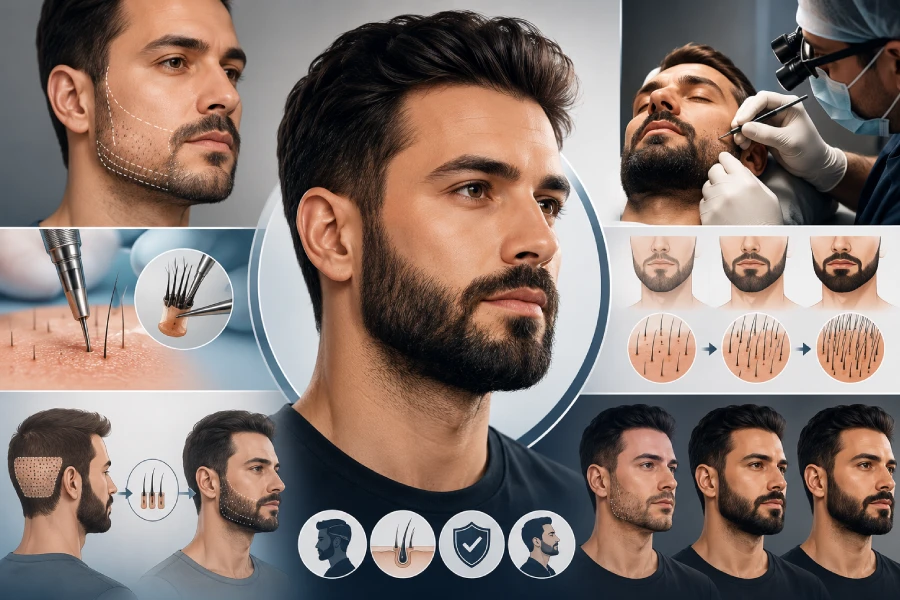
A beard hair transplant is a minimally invasive cosmetic procedure in which healthy hair follicles are extracted from the back of the scalp and transplanted into areas of the beard with little or no hair growth.
Unlike temporary solutions, transplanted follicles continue to grow naturally for a lifetime because they retain the genetic characteristics of the donor hair.
The procedure can be performed to:
- Create a completely new beard
- Fill patchy beard areas
- Increase beard density
- Restore mustaches
- Enhance sideburns
- Improve jawline definition
- Correct beard scars caused by burns, injuries, or acne
The goal is to create facial hair that complements your facial structure and looks completely natural.
Who Is an Ideal Candidate for Beard Hair Transplant?
You may be a suitable candidate if you have:
- Naturally patchy beard growth
- Sparse facial hair due to genetics
- Uneven beard density
- Facial scars with no hair growth
- Poor beard development despite adulthood
- Previous beard transplant requiring correction
The most important requirement is having a healthy donor area with sufficient scalp hair.
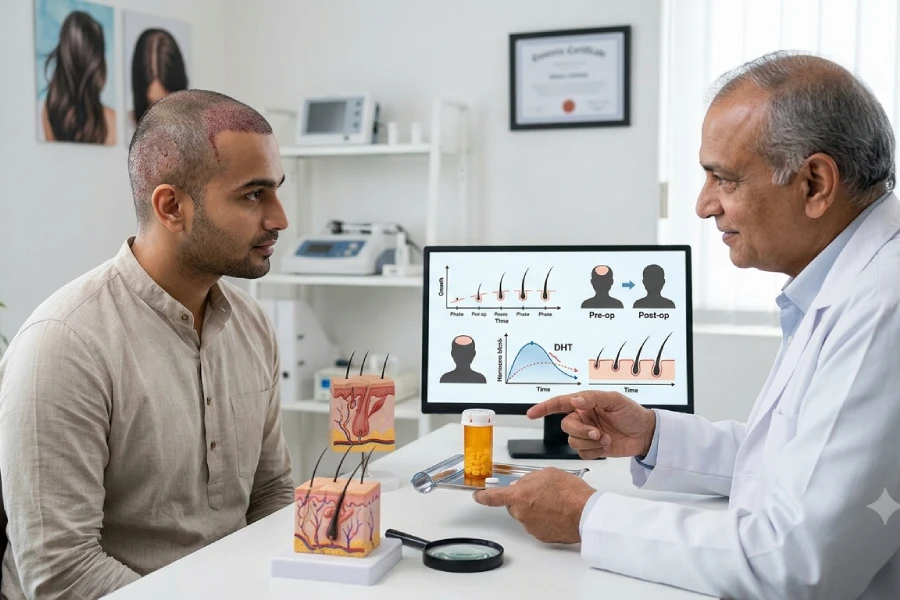
A detailed consultation helps determine whether you have adequate donor hair and realistic expectations for the procedure.
Why micro FUE Is the Preferred Technique for Beard Hair Transplant
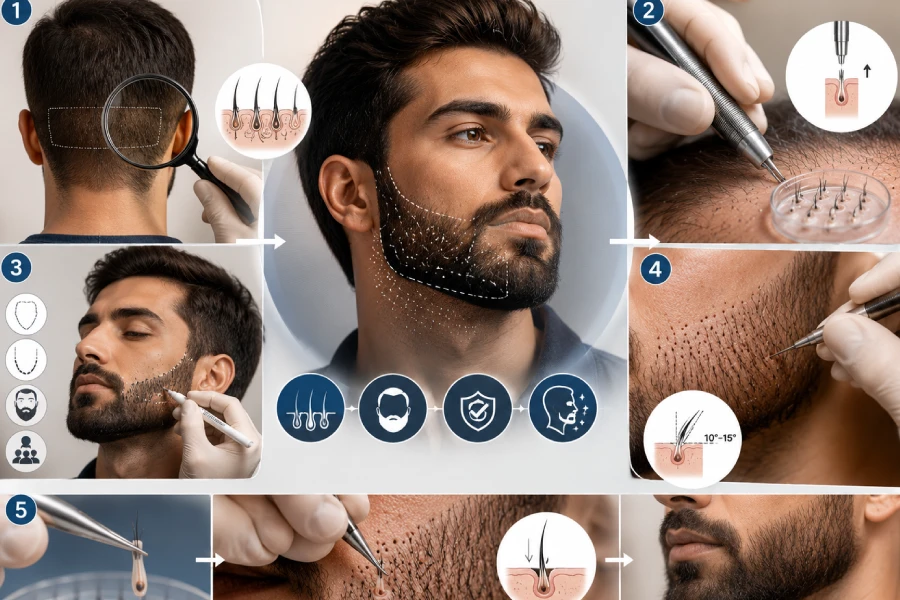
Modern beard restoration is almost exclusively performed using micro Follicular Unit Extraction (FUE) because it offers excellent precision with minimal scarring.
Unlike older strip methods, FUE removes individual follicular units one at a time using tiny punches, leaving virtually invisible extraction marks hidden within the donor hair.
Step 1: Donor Area Evaluation
The procedure begins with evaluating the donor region at the back of the scalp. These hairs are genetically resistant to hair loss and closely resemble beard hair once transplanted.
The donor area is carefully selected to ensure that harvesting does not affect overall scalp density.
Step 2: Follicle Extraction
Using specialized FUE instruments, individual follicular units are extracted with minimal trauma.
Each graft is carefully preserved to maximize survival during implantation.
Step 3: Beard Design
One of the most important stages is designing the beard.
Dr. Sumit Agrawal customizes the beard according to:
- Face shape
- Jawline
- Existing facial hair
- Desired beard style
- Age
- Ethnicity
Rather than creating identical beards for every patient, the design is personalized for natural aesthetics.
Step 4: Recipient Site Creation
Tiny recipient sites are created in the beard area.
This stage requires exceptional precision because beard hair grows much flatter against the skin compared to scalp hair—typically at an angle of just 10°–15°. Every incision must replicate the natural angle, direction, and depth of existing facial hair to ensure seamless blending.
Step 5: Graft Implantation
Each follicle is implanted individually.
Surgeons pay close attention to:
- Hair direction
- Curl pattern
- Natural spacing
- Density
- Symmetry
These details make the difference between an artificial-looking beard and one that appears completely natural.
Beard Hair Transplant Procedure at a Glance
| Aspect |
Details |
| Technique |
Micro FUE (Follicular Unit Extraction) |
| Donor Site |
Sides of the scalp |
| Grafts Required |
800–2,500 grafts |
| Procedure Time |
3–6 hours |
| Anaesthesia |
Local anaesthesia |
| Downtime |
2–3 days |
How Many Grafts Do You Need?
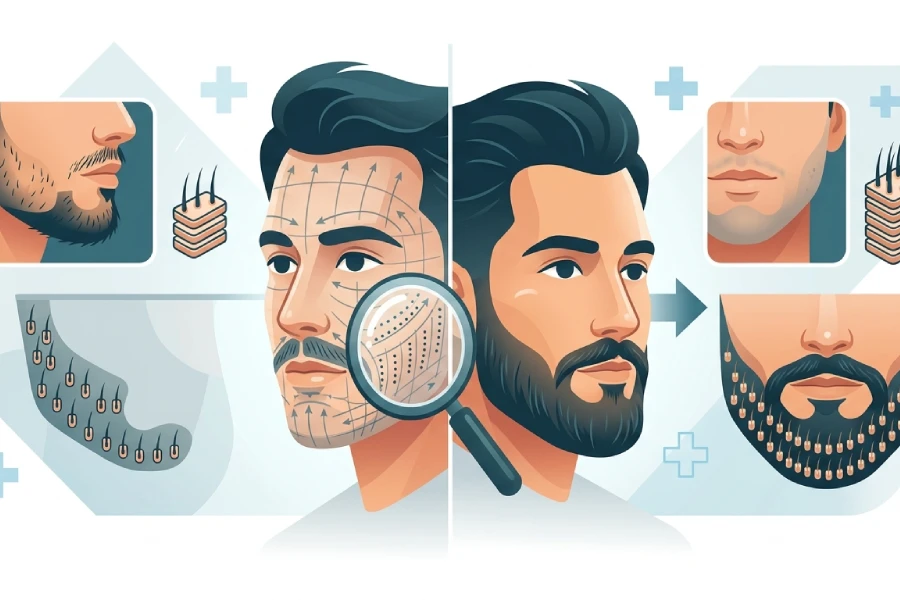
The number of grafts depends on the size of the treatment area, current facial hair, and desired density.
Someone wanting to fill small patchy areas may only require around 800–1,000 grafts, while a complete beard reconstruction may require up to 2,500 grafts.
Rather than focusing only on quantity, experienced surgeons prioritize strategic placement, ensuring that every graft contributes to a fuller yet natural appearance.
Zone-Wise Beard Transplant Planning
Every part of the beard has unique density and growth patterns. During surgery, each zone is treated differently to recreate natural facial hair.
| Zone |
Approx. Grafts |
Density (FU/cm²) |
Hair Direction |
Notes |
| Mustache |
300–500 |
35–45 |
Downward + lateral |
Avoid placing grafts too close to the nose. |
| Sideburns |
200–300 per side |
25–30 |
Downward with natural taper |
Blended seamlessly with scalp hair. |
| Cheeks |
600–1,000 |
20–30 |
Downward + outward |
Upper beard line customized to face shape. |
| Chin / Goatee |
600–800 |
40–50 |
Outward |
Creates the central beard density. |
| Jawline |
500–700 |
30–40 |
Along the mandibular arc |
Defines jawline and masculine contours. |
| Submental Area |
Optional (100–200) |
Varies |
Downward & backward |
Added for fuller beard styling if desired. |
This customized planning ensures that the beard looks natural from every angle rather than appearing uniformly dense or artificial.
What Happens During Recovery After Beard Hair Transplant?
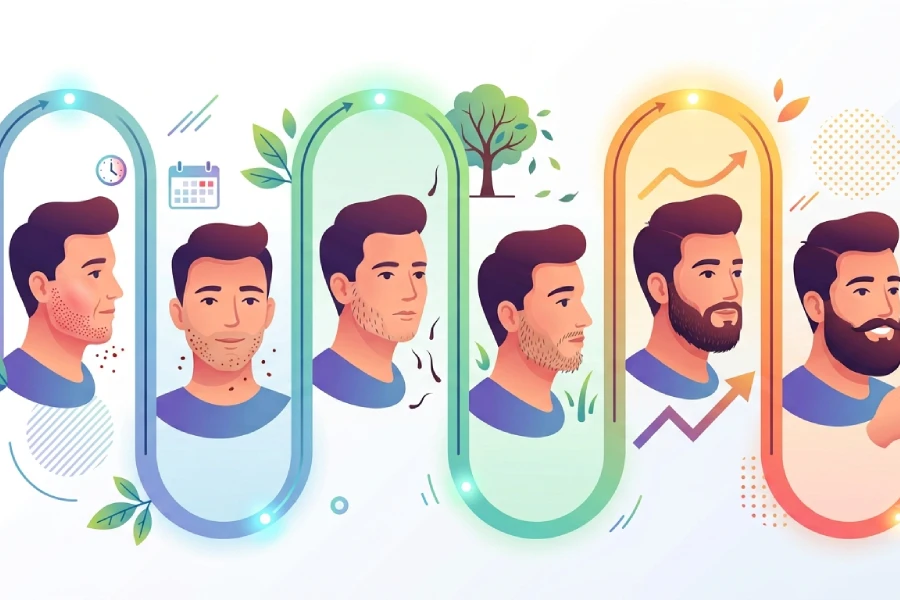
Recovery after a beard transplant is usually smooth and significantly shorter than many people expect.
First 48 Hours
- Mild swelling may occur.
- Tiny scabs form around implanted grafts.
- Some redness is normal.
Days 3–7
- Swelling gradually subsides.
- Scabs begin falling off naturally.
- Most patients can comfortably resume work.
Weeks 2–4
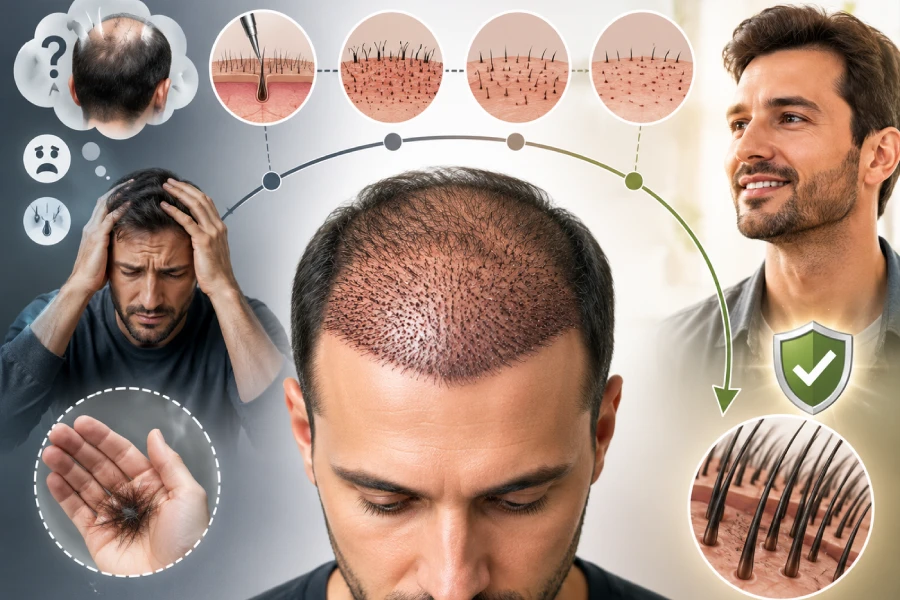
A temporary shedding phase, known as shock loss, is common. This is completely normal, as the transplanted follicles enter a resting phase before producing new hair.
Months 3–4
New beard hairs begin emerging gradually.
Months 6–8
Noticeable improvement in beard density and coverage becomes visible.
Months 10–12
The transplanted beard reaches its mature appearance, allowing patients to trim, shape, and style it just like natural facial hair.
Beard Hair Transplant Cost in Mumbai
The cost of a beard transplant depends on several factors, including:
- Number of grafts required
- Extent of beard restoration
- Facial design complexity
- Existing beard density
- Surgeon expertise
- Technique used
At Harleys Hair Transplant Clinic, the cost typically ranges between ₹1,00,000 and ₹2,00,000.
Beard Hair Transplant Cost Summary
| Cost Type |
Approximate Cost |
| Minimum Cost |
₹1,00,000 |
| Average Cost |
₹1,25,000 |
| Maximum Cost |
₹200,000 |
A consultation helps determine the exact graft requirement and provides a personalised cost estimate based on your facial hair goals.
How to Make Your Beard Transplant Results Last
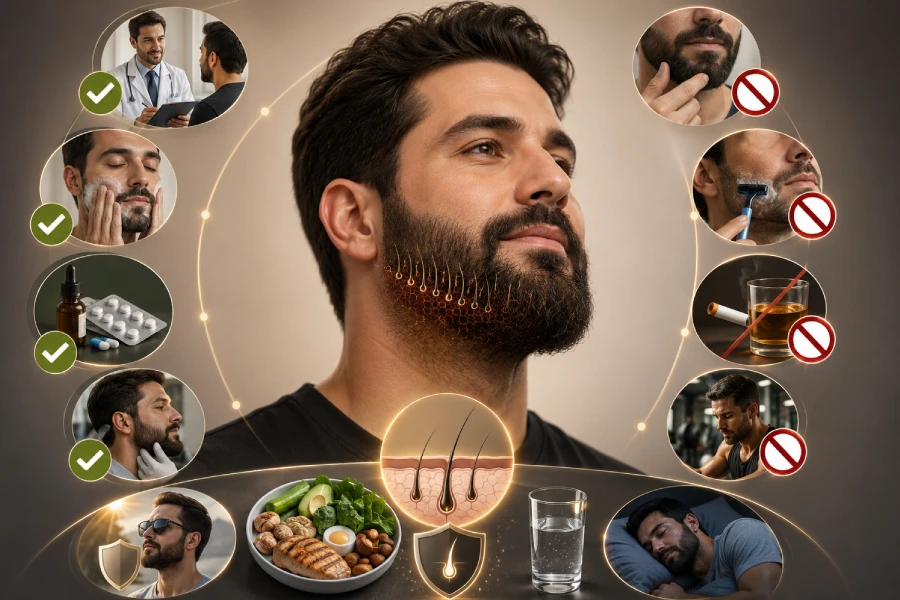
A beard transplant offers permanent results, but proper aftercare is essential for optimal graft survival.
Follow your surgeon's instructions carefully
Cleaning routines, medications, and follow-up visits all play an important role during the initial healing period.
Avoid touching or scratching the grafts
The newly implanted follicles need time to anchor securely.
Skip shaving initially
Patients are usually advised to avoid shaving until the transplanted follicles have healed completely.
Avoid smoking and alcohol during recovery
Both can affect blood circulation and slow healing.
Protect your skin
Avoid excessive sun exposure and strenuous workouts during the first few weeks.
Maintain a healthy lifestyle
A balanced diet, adequate protein intake, hydration, and good sleep support healthy hair growth over the long term.
Why Choosing an Experienced Hair Transplant Surgeon Matters
Beard transplantation is one of the most technically demanding hair restoration procedures.
Unlike scalp hair, facial hair grows in multiple directions with varying density across different zones. Even slight errors in angle or placement can make the beard appear unnatural.
An experienced surgeon understands:
- Facial aesthetics
- Beard proportions
- Hair angulation
- Density gradients
- Donor area management
- Long-term facial harmony
This expertise is what transforms a technically successful transplant into one that is virtually undetectable.
Why Choose Harleys Hair Transplant Clinic for Beard Restoration?
At Harleys Hair Transplant Clinic, every beard transplant is personally planned by Dr. Sumit Agrawal, who combines advanced FUE techniques with a deep understanding of facial anatomy, hair direction, and natural beard design. From evaluating the donor area to carefully placing each follicular unit, every step is performed with the goal of delivering dense, symmetrical, and long-lasting results that complement your unique facial features.
Patients choose Harleys not only for its modern technology but also for its personalised treatment approach, transparent consultations, and commitment to natural-looking outcomes. Whether you're looking to fill patchy areas, restore a beard affected by scars, or achieve a complete beard transformation, you receive a treatment plan tailored specifically to your needs.
If you've been considering facial hair restoration, now is the ideal time to consult with Dr. Sumit Agrawal. A detailed assessment can determine your graft requirement, beard design, and expected results, helping you take the first step toward achieving a fuller, more defined beard with confidence.
 +91 9967333879