Medically Reviewed by Dr. Sumit Agrawal | Published on Jul, 22 2026
Finasteride After Hair Transplant: An Evidence-Based Guide for Indian Patients
Getting a hair transplant is an important milestone in your hair restoration journey, but the surgery itself is only one part of achieving long-lasting results. One of the most common questions patients ask after the procedure is, "Do I need to take finasteride after a hair transplant?"
The answer isn't the same for everyone.
Some patients are advised to take finasteride as part of their long-term hair maintenance plan, while others may not be suitable candidates. The decision depends on factors such as age, the pattern of hair loss, family history, the stability of your hair loss, future expectations, and your overall health.
Dr. Sumit Agrawal from Harleys Hair Transplant clinic believes that successful hair restoration goes beyond transplanting healthy follicles. Preserving your existing natural hair is equally important for achieving balanced, long-lasting, and natural-looking results. That's why medications such as finasteride may be discussed as part of a personalised treatment plan after surgery.
In this blog, we'll explain what finasteride is, how it works after a hair transplant, what scientific evidence says, common myths, possible side effects, and whether it may be the right choice for you.
What Is Finasteride?
Finasteride is an oral prescription medication commonly used to treat male pattern hair loss (androgenetic alopecia).
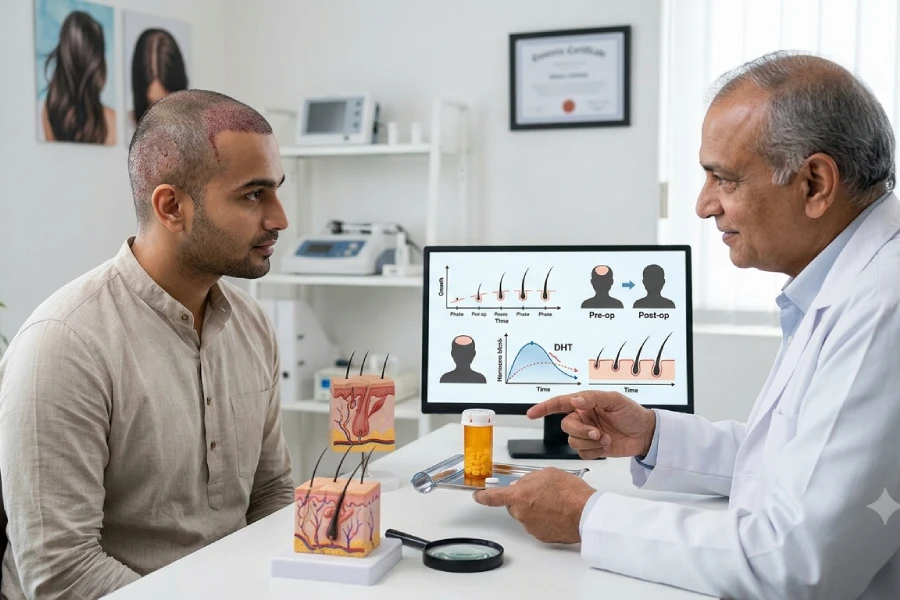
It works by reducing the levels of dihydrotestosterone (DHT), a hormone primarily responsible for shrinking genetically sensitive hair follicles.
Over time, DHT causes hair follicles to become smaller, producing thinner and shorter hairs until they eventually stop growing altogether. By lowering DHT levels, finasteride helps slow this process, allowing susceptible hair follicles to continue producing healthier hair for a longer period.
It is important to understand that finasteride does not create new hair follicles. Instead, it helps protect the follicles that are still alive.
Why Is Finasteride Recommended After a Hair Transplant?
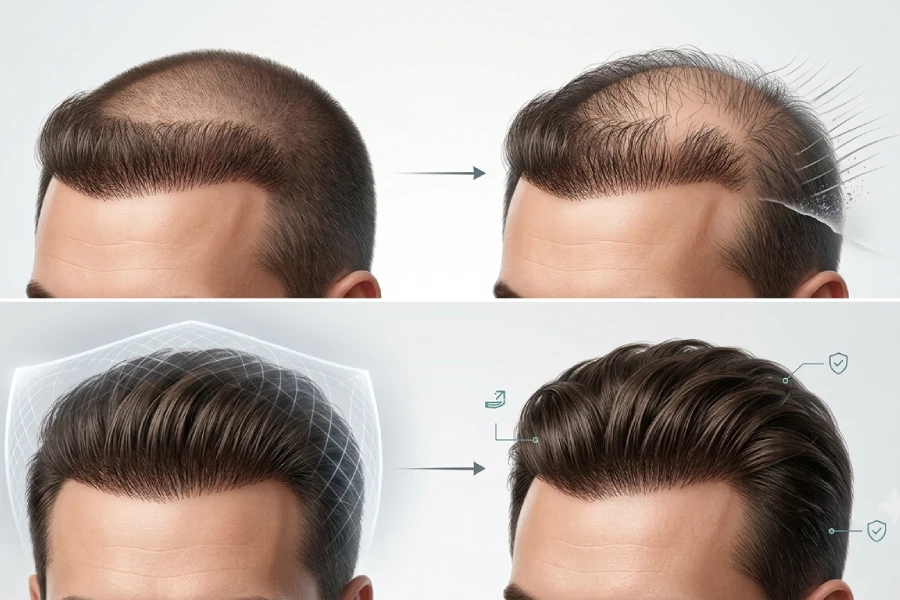
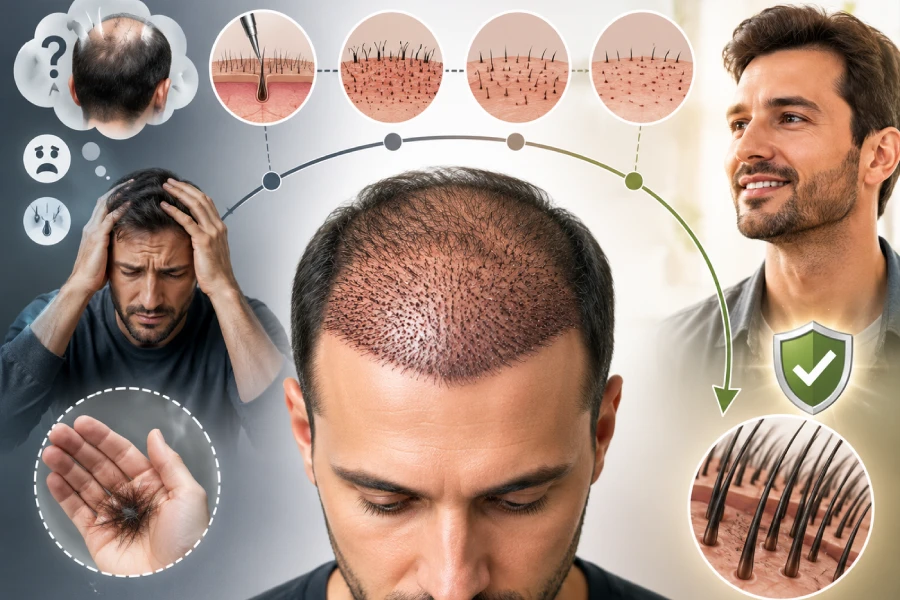
Many people assume that a hair transplant permanently solves all hair loss. While transplanted hair is generally resistant to DHT, your existing non-transplanted hair can continue to thin over time if male pattern baldness progresses.
Finasteride is often prescribed to help:
- Slow ongoing hair loss
- Preserve existing natural hair
- Improve overall hair density
- Support a more balanced appearance over time
- Reduce the likelihood of requiring another transplant in the future
Rather than replacing the role of a hair transplant, finasteride complements it by helping maintain the surrounding hair.
How Does Finasteride Work?
Hair follicles go through repeating cycles of growth, transition, and rest.
In people with androgenetic alopecia, DHT gradually shortens the growth phase while increasing follicle miniaturisation.
Finasteride blocks the enzyme 5-alpha reductase (Type II), which converts testosterone into DHT.
Lower DHT levels reduce ongoing damage to susceptible follicles, allowing many hairs to remain thicker and healthier for longer.
This process does not happen overnight. Hair growth is gradual, which is why patients are generally advised to continue treatment consistently if it is prescribed.
Does Finasteride Help Transplanted Hair?
This is one of the biggest misconceptions.
The transplanted follicles themselves are typically taken from the back and sides of the scalp, where hair is naturally more resistant to DHT.
Because of this, transplanted hair generally does not require finasteride to survive. Instead, finasteride mainly helps protect the native hair surrounding the transplant, preserving overall density and creating a more natural long-term result.
When Is Finasteride Usually Started After Hair Transplant?
The timing varies depending on the individual and the surgeon's treatment protocol.
Some patients may already be taking finasteride before surgery and continue it afterward, while others may begin treatment once the scalp has healed sufficiently.
The exact timing should always be determined by your treating surgeon based on your medical history, current medications, and recovery progress.
Never start or stop prescription medication without consulting your doctor.
What Does the Scientific Evidence Say?

Finasteride is one of the most extensively studied medications for male pattern hair loss.
Clinical studies have consistently shown that it can:
- Slow the progression of androgenetic alopecia
- Increase hair retention in many patients
- Improve hair density in suitable candidates
- Help maintain long-term hair restoration outcomes when combined with appropriate surgical treatment
However, it is not a cure for hair loss. Its benefits generally continue only while the medication is being used under medical supervision.
Who May Benefit the Most From Finasteride?
Finasteride is commonly considered for:
- Men with early or moderate male pattern baldness
- Younger patients likely to experience future hair loss
- Patients undergoing hair transplant surgery with significant native hair remaining
- Individuals with progressive thinning despite transplantation
It may be less beneficial in areas where hair follicles have already been permanently lost.
Who May Not Be a Suitable Candidate?

Although finasteride is widely prescribed, it is not appropriate for everyone.
Your doctor may advise against it if:
- You have certain medical conditions
- You have experienced intolerance to the medication previously
- There are specific contraindications based on your medical history
- The potential risks outweigh the expected benefits
This is why self-medication should always be avoided.
Possible Side Effects: Understanding the Reality
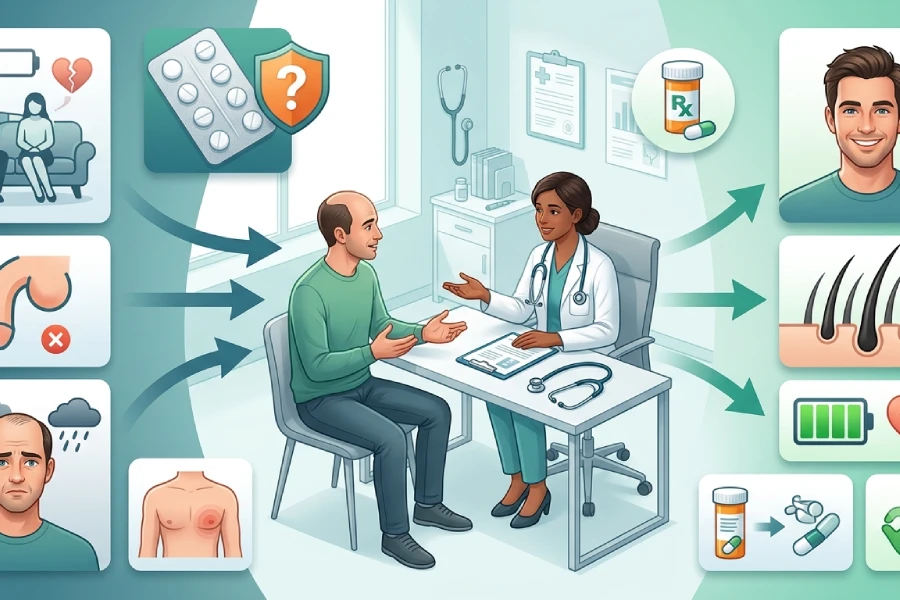
Like any prescription medication, finasteride may cause side effects in some individuals.
Possible side effects can include:
- Reduced libido
- Erectile dysfunction
- Changes in ejaculation
- Breast tenderness (rare)
- Mood-related symptoms (reported in some patients)
It is equally important to know that many people take finasteride without experiencing significant side effects. If side effects occur, they should be discussed with your doctor rather than ignored or managed independently.
Your treating surgeon can help determine whether continuing, adjusting, or discontinuing treatment is appropriate.
Myths vs Facts About Finasteride
| Myth |
Fact |
| A hair transplant means you no longer need any medication. |
Many patients benefit from medical therapy to preserve existing hair after surgery. |
| Finasteride grows new hair everywhere. |
It helps protect and maintain existing follicles; it does not create new follicles. |
| Everyone experiences side effects. |
Side effects are possible but do not occur in every patient. Many use the medication without significant issues. |
| Results appear within a few weeks. |
Hair growth is gradual, and benefits usually take several months to become noticeable. |
| You should start taking finasteride on your own after surgery. |
Finasteride is a prescription medication and should only be used under medical guidance. |
Dr. Sumit Agrawal's Perspective
"A successful hair transplant is not only about restoring lost hair, it is also about preserving the hair you already have. Finasteride can be a valuable part of long-term hair restoration for carefully selected patients, but the decision should always be individualised. Every treatment plan at Harleys Hair Transplant Clinic is based on a thorough assessment of the patient's hair loss pattern, goals, and overall health."
— Dr. Sumit Agrawal
Frequently Asked Questions
Can I stop finasteride after my hair transplant?
This depends on your pattern of hair loss and your surgeon's recommendation. Stopping the medication may allow natural hair loss to continue in existing follicles.
Will finasteride affect my transplanted hair?
Its primary role is to protect existing native hair. Transplanted follicles are generally resistant to DHT.
Is finasteride suitable for every hair transplant patient?
No. Treatment decisions should always be personalised after consultation with a qualified hair restoration specialist.
Can women take finasteride?
Yes, Finastride is also advised in women commonly Post Menopausal. Finastride 5mg is not routinely prescribed for women with hair loss and should only be considered in specific situations under specialist medical supervision.
The Importance of Personalised Hair Loss Management
No two patients experience hair loss in exactly the same way. Factors such as age, genetics, the extent of hair thinning, donor hair availability, and future hair loss all influence the ideal treatment plan.
For some patients, a hair transplant alone may provide excellent long-term results. Others may benefit from combining surgery with medical therapy to preserve surrounding hair and maintain a fuller appearance for years to come.
The key is understanding that hair restoration is not a one-time event—it is an ongoing process that should be guided by evidence and individual needs rather than assumptions.
Why Choose Harleys Hair Transplant Clinic?
At Harleys Hair Transplant Clinic, Dr. Sumit Agrawal takes a comprehensive approach to treatment, combining advanced surgical expertise with personalised post-transplant care. Every recommendation, including whether finasteride is appropriate, is based on a detailed evaluation of your hair loss pattern, medical history, and future goals rather than a one-size-fits-all protocol.
Whether you're considering a hair transplant or looking for guidance on maintaining your results, consulting an experienced hair restoration specialist can help you make informed decisions backed by science. With the right treatment plan and ongoing care, you can maximise the longevity of your results and enjoy healthier, more natural-looking hair for years to come.
 +91 9967333879