Medically Reviewed by Dr. Sumit Agrawal | Published on Jul, 24 2026
What Nobody Tells You About Shock Loss After Hair Transplant
You finally take the leap, undergo a hair transplant, follow every post-operative instruction carefully, and then, just a few weeks later, your newly transplanted hair starts falling out.
For many patients, this is the moment panic sets in.
"Did my transplant fail?"
"Are the grafts gone?"
"Was all that time, money, and effort wasted?"
The truth is, what you're experiencing is often completely normal.
One of the least understood yet most common phases of hair restoration is shock loss. While surgeons discuss it during consultations, many patients are still surprised by how dramatic it can look. The good news is that, in most cases, shock loss is temporary and is actually part of the natural healing process.
Dr. Sumit Agrawal from Harleys Hair Transplant clinic believes that patient education is just as important as the surgery itself. Knowing what happens after your procedure—including the stages of healing and hair growth—can help you approach recovery with confidence instead of anxiety.
In this blog on shock loss after a hair transplant, we'll uncover what nobody tells you about shock loss after a hair transplant, why it happens, how long it lasts, and when you should (and shouldn't) be concerned.
The "Hair Fall" That Doesn't Mean Your Hair Transplant Failed
One of the biggest misconceptions is that hair falling out after a transplant means the grafts have failed.
In reality, it is usually the hair shaft that sheds—not the follicle itself.
Think of the transplanted follicle as a seed planted in new soil. Before it begins producing healthy new hair, it temporarily enters a resting phase. During this period, the visible hair sheds while the follicle remains safely beneath the scalp, preparing for a new growth cycle.
In other words, shedding is often a sign that the follicles are transitioning—not disappearing.
Shock Loss Is More Common Than Most People Think
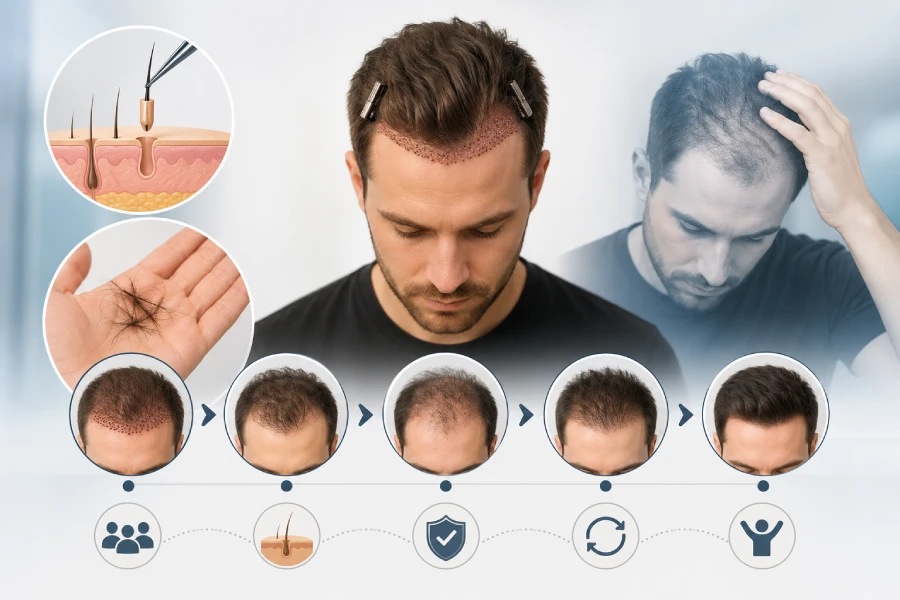
Many patients expect immediate hair growth after surgery because they leave the clinic with visible transplanted hairs.
However, the transplanted hair doesn't simply continue growing uninterrupted.
In fact, temporary shedding is considered a normal biological response after hair transplantation and is experienced by a large number of patients to varying degrees.
Some notice only mild shedding, while others experience significant hair fall before regrowth begins.
The amount of visible shedding varies from person to person, but it is usually not an indicator of the final result.
What Exactly Is Shock Loss?
Shock loss refers to the temporary shedding of hair following the stress of surgery.
It may involve:
- Newly transplanted hairs
- Existing surrounding hairs
- Occasionally, both
The procedure itself temporarily interrupts the normal hair growth cycle.
Instead of continuing active growth, affected follicles enter the telogen (resting) phase, after which the old hair sheds. Over time, healthy new hair begins growing from those follicles again.
The important point is that temporary hair loss does not necessarily mean permanent follicle loss.
The Hair Transplant Timeline Nobody Prepares You For
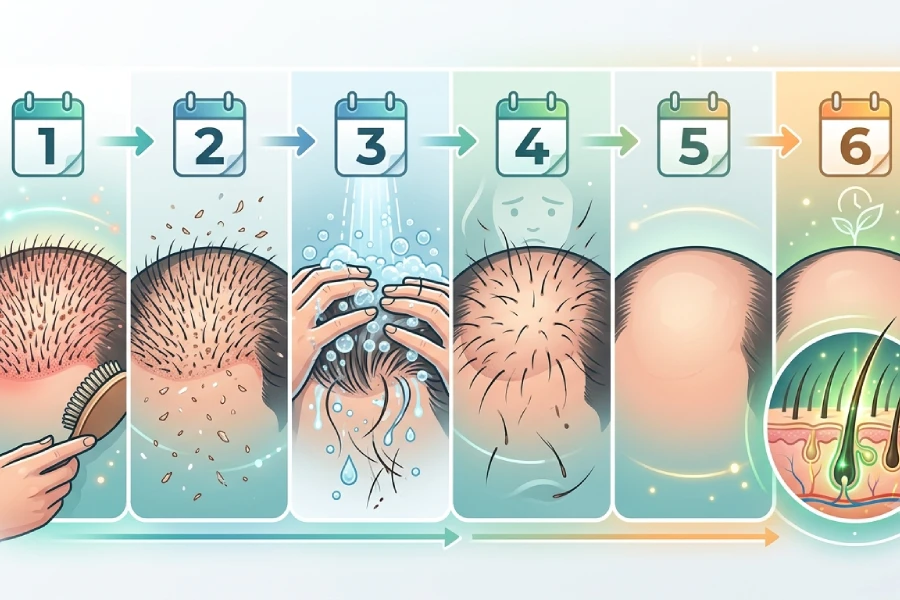
Understanding the recovery journey helps set realistic expectations.
| Timeline |
What Usually Happens |
| Day 1–7 |
Mild swelling, redness and tiny scabs appear. Newly implanted grafts begin healing. |
| Week 2 |
Scabs naturally fall off. Transplanted hairs are still visible. |
| Weeks 2–6 |
Shock loss usually begins. Many transplanted hairs start shedding. |
| Month 2 |
Hair may look thinner than before surgery, which is completely normal for many patients. |
| Month 3 |
New follicles gradually wake up and early growth begins. |
| Month 4 |
Fine new hairs become visible across transplanted areas. |
| Months 5–6 |
Noticeable improvement in coverage and density. |
| Months 7–8 |
Hair becomes thicker, stronger and easier to style. |
| Months 9–10 |
Continued increase in density with more mature hair texture. |
| Months 11–12 |
Most patients see their final or near-final results, with natural-looking growth and improved density. |
What to Expect During the Shedding Phase (Week by Week)
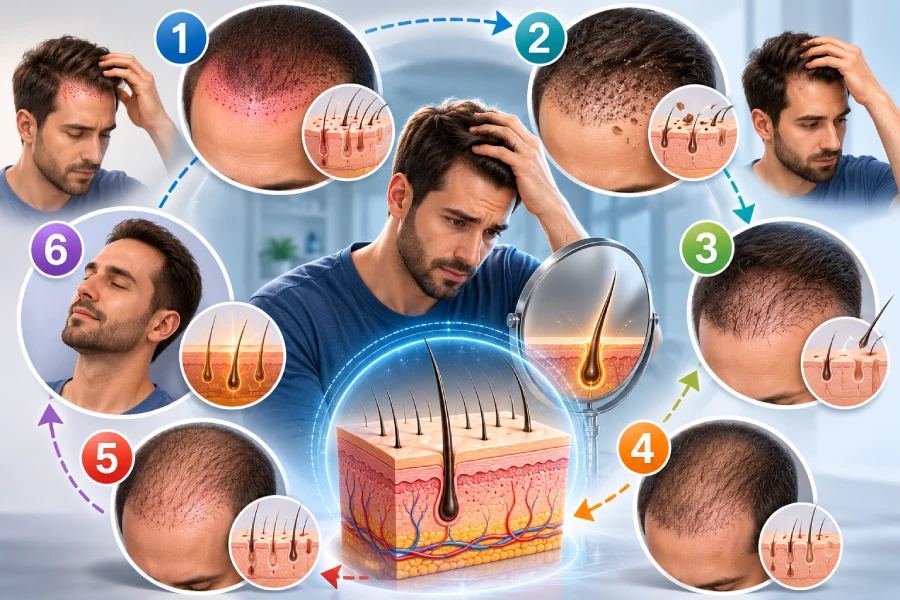
The shedding phase often causes the greatest anxiety because visible progress temporarily seems to disappear.
Week 1
- Mild redness and swelling
- Tiny scabs form around grafts
- Hair remains intact
Week 2
- Scabs begin falling away naturally
- Hair still appears relatively unchanged
Week 3
- Shedding usually begins
- Loose transplanted hairs may come out while washing or combing
Week 4
- Shedding becomes more noticeable
- Hair density appears reduced
Week 5
- Most transplanted hairs have shed
- The scalp may resemble its pre-transplant appearance
Week 6
- The scalp enters a resting phase
- Little visible growth occurs, but the follicles remain healthy beneath the skin
Although this period can feel discouraging, it is usually temporary and expected.
Here's Something Many Patients Don't Realise: Shock Loss Can Affect Existing Hair Too
Shock loss doesn't always involve only the transplanted hairs.
In some patients, particularly those with ongoing male pattern baldness—the existing natural hair surrounding the transplanted area may also temporarily shed.
This happens because the surgery creates temporary stress in the scalp, causing nearby follicles to enter the resting phase.
Fortunately, in many cases, these hairs also regrow over the following months.
Patients with significant pre-existing thinning may be advised to use supportive medical therapies, such as medications or regenerative treatments, to help preserve their native hair where appropriate.
Does Everyone Experience Shock Loss?
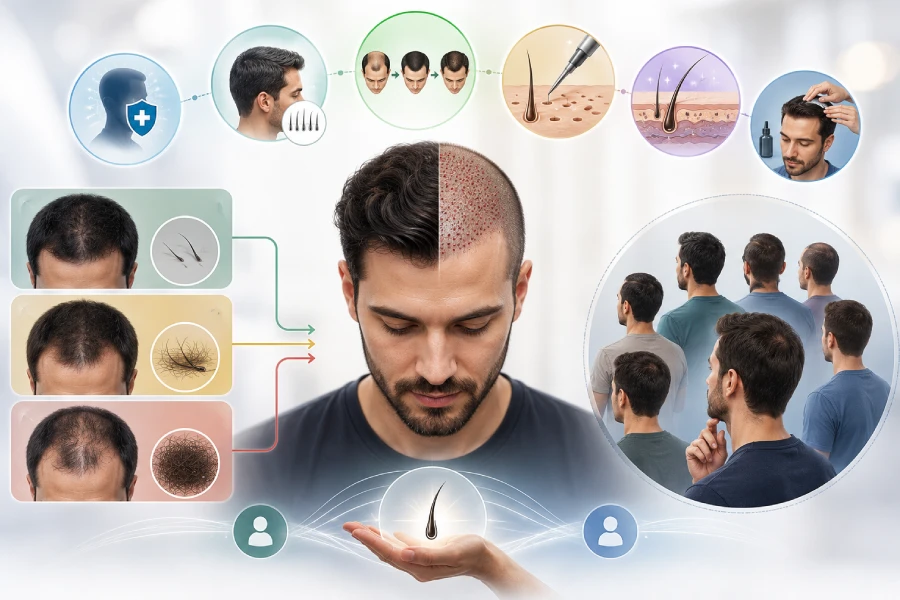
Not necessarily !
Some patients experience:
- Minimal shedding
- Moderate shedding
- Extensive but temporary shedding
Several factors influence the extent of shock loss, including:
- Individual healing response
- Existing hair density
- Stage of hair loss
- Surgical technique
- Scalp health
- Post-operative care
Because every scalp responds differently, comparing your recovery with someone else's is rarely helpful.
Why Some Patients Panic at Month Two (When They Shouldn't)
Perhaps the most emotionally challenging stage occurs around the second month.
By this time:
- The transplanted hairs have largely shed.
- New growth has not yet started.
- Hair may actually appear thinner than before surgery.
Many patients worry that the transplant has failed.
In reality, this is often the quiet phase of recovery, where the follicles are preparing to enter a new growth cycle beneath the scalp.
The visible transformation usually begins only after this stage.
Can You Prevent Shock Loss Completely?
Unfortunately, no.
Because shock loss is part of the body's natural healing response, it cannot always be prevented.
However, experienced surgeons can minimise unnecessary trauma during surgery by using refined techniques, careful graft handling, and precise implantation.
Patients can also support healthy recovery by following all post-operative instructions.
How to Minimise Hair Transplant Shock Loss

While complete prevention isn't possible, these measures may help support optimal healing:
Follow your surgeon's aftercare plan
Cleaning routines, medications, and follow-up visits all contribute to a smoother recovery.
Avoid touching the grafts
The newly transplanted follicles need time to establish themselves.
Protect your scalp
Avoid excessive sun exposure, strenuous exercise, and activities that may disturb the healing grafts during the initial recovery period.
Eat a balanced diet
Adequate protein, vitamins, minerals, and hydration support healthy hair growth.
Avoid Smoking
Be patient
One of the biggest mistakes patients make is judging their transplant too early.
Hair restoration is measured in months, not weeks.
When Is Shock Loss Not Normal?
Although shock loss is usually expected, there are situations where you should contact your surgeon.
Seek medical advice if you notice:
- Persistent bleeding
- Increasing pain
- Significant swelling after the initial recovery period
- Signs of infection
- Fever
- Unusual discharge
- Sudden severe scalp redness
- Any concerns about graft healing
Regular follow-up appointments allow your surgeon to monitor healing and reassure you throughout the recovery process.
The Secret to Great Hair Transplant Results Isn't Just Surgery
Many people focus entirely on the day of surgery.
In reality, successful hair restoration depends on three equally important stages:
- Proper surgical planning
- Precise graft implantation
- Consistent post-operative care and realistic expectations
Understanding the recovery process, including shock loss, helps patients stay committed to the journey instead of becoming discouraged during temporary setbacks.
Trust the Process and Trust the Right Team
Shock loss can be emotionally challenging, especially if you aren't expecting it. But understanding why it happens, how long it lasts, and what comes next can make all the difference in your hair restoration journey.
At Harleys Hair Transplant Clinic, every patient receives more than just a surgical procedure, they receive personalised guidance before, during, and long after the transplant. Dr. Sumit Agrawal takes the time to educate patients about every stage of recovery, ensuring they know exactly what to expect and when to expect it. From meticulous graft placement using advanced FUE techniques to comprehensive aftercare and regular follow-ups, the focus is always on achieving natural-looking, long-lasting results.
If you're considering a hair transplant or have questions about recovery, scheduling a consultation with Dr. Sumit Agrawal can help you understand your options, set realistic expectations, and begin your hair restoration journey with confidence.
 +91 9967333879