Medically Reviewed by Dr. Sumit Agrawal | Published on Jul, 14 2026
Hair Patch vs Hair Transplant: Pros, Cons & Cost Comparison
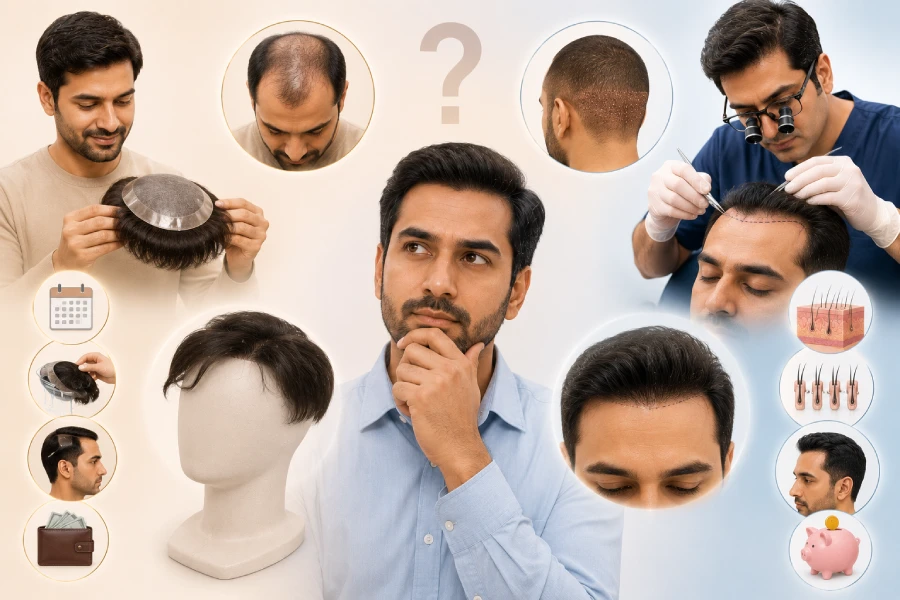
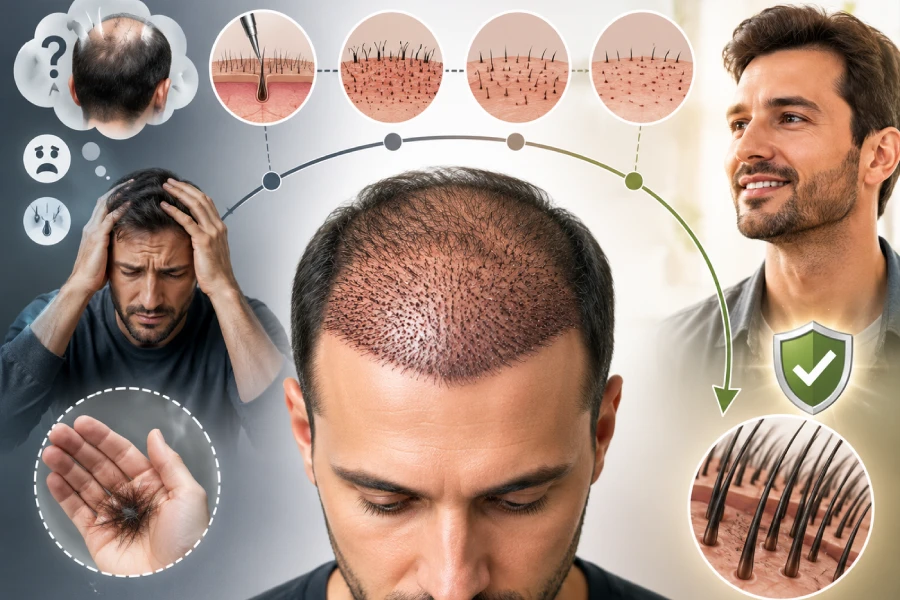
When patients walk into Harley's Hair Transplant Clinic, with these feelings of anxiety, the most common question they ask during consultation, with Dr Sumit Agrawal, is whether a hair patch or a hair transplant would work better. The doctor explains that both are designed to improve hair appearance, but they work in completely different ways.
If you are unable to understand hair treatments, here’s a simple guide that will help you understand the pros, cons, costs, and everything about hair restoration procedures.
What Is a Hair Patch?
You’re losing your hair, but don’t know how a hair patch actually helps. Well, a hair patch is a non-surgical hair replacement system in which an artificial or natural hair unit is attached to the scalp using clips, glue, tapes, or bonding methods. It’s not a wig that covers the entire head region; it covers only bald or thinning areas.
Hair patches are usually customised according to:
- Hair colour
- Hair density
- Texture
- Bald area size
They provide instant coverage and are often chosen by people who want quick results without surgery.
Pros of Hair Patch
Instant Result
One of the biggest advantages is immediate transformation. You can walk out with a fuller-looking scalp within a single session.
Non-Surgical Procedure
There are no injections, stitches, scars, or recovery time involved.
Lower Initial Cost
Hair patches usually cost less initially compared to hair transplant surgery.
Suitable for Extensive Baldness
People with advanced baldness and weak donor hair may still use a hair patch effectively.
No Downtime
Most people can resume normal activities immediately after application.
Cons of Hair Patch

Requires Regular Maintenance
Hair patches need periodic cleaning, repositioning, reattachment, and replacement over time.
Temporary Solution
Unlike transplanted hair, a patch does not permanently grow from the scalp.
Can Feel Uncomfortable
Some people experience sweating, itching, or discomfort, especially in humid weather.
Risk of Detachment
Improper bonding or maintenance may lead to loosening during sports, travel, or swimming.
Long-Term Costs Add Up
Although cheaper initially, repeated maintenance and replacement can become expensive over the years.
What Is a Hair Transplant?
A hair transplant is a hair restoration procedure that involves surgery, where natural hair follicles are taken from the donor area, usually the back or sides of the scalp, and implanted into bald or thinning areas.
The two most common techniques are:
- FUE (Follicular Unit Extraction)
- FUT (Follicular Unit Transplantation)
The transplanted hair grows naturally from your own scalp and can usually be cut, styled, and washed like normal hair.
Pros of Hair Transplant
Permanent Solution
Transplanted hair follicles are generally resistant to hair loss and continue growing naturally.
Natural Appearance
Modern techniques can create realistic density and natural-looking hairlines.
Low Maintenance
Once the hair grows fully, there is no need for frequent attachment or replacement sessions.
Freedom in Lifestyle
You can swim, exercise, style your hair, and travel without worrying about hair systems shifting.
Improved Confidence
Many patients prefer the psychological comfort of having their own growing hair again.
Cons of Hair Transplant
Surgical Procedure
It involves local anaesthesia, graft extraction, and recovery time.
Results Take Time
Visible growth usually starts after 3–4 months, while final results may take 10–12 months.
Higher Initial Cost
Compared to a hair patch, the upfront investment is higher.
Requires Good Donor Hair
Not everyone is an ideal candidate, especially individuals with poor donor density.
Possible Need for Future Sessions
Some patients with progressive hair loss may require additional sessions later.
Cost Comparison: Hair Patch vs Hair Transplant
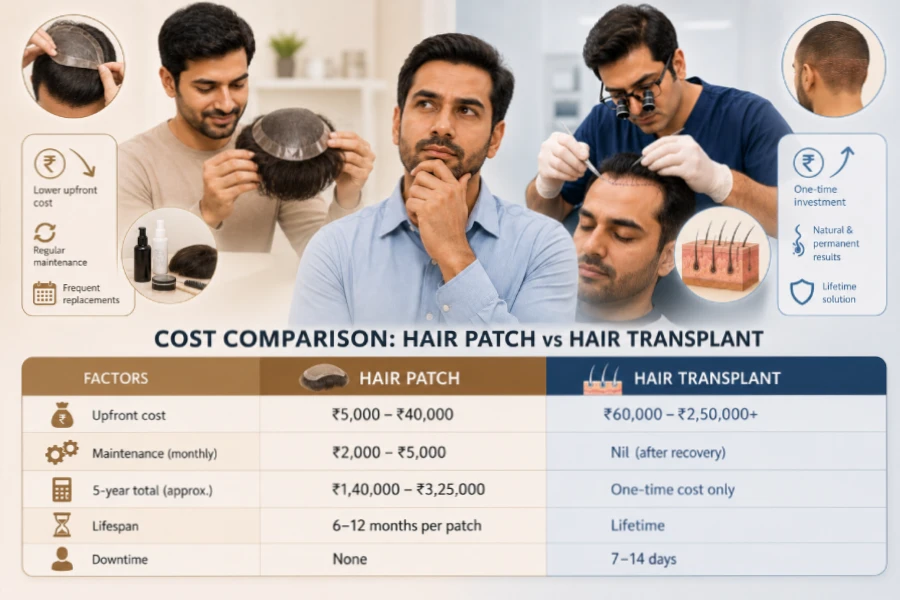
This is where patients often get surprised: Which procedure is best, but we’re not here to decide that, because it’s something to be advised by a doctor, after evaluation of the scalp and diagnostics.
However, let’s understand the dynamics before you choose to go with any of these.
A hair patch seems cheaper — and it is, upfront, but it requires yearly maintenance. But hair loss is usually a long-term situation, and when you add up the monthly maintenance sessions, adhesive products, and patch replacements over five years, the math changes dramatically.
While the starting cost may appear affordable, ongoing maintenance every few weeks or months can increase total expenses over time, and that’s why it’s not a good option to consider, especially in severe cases, unless strongly advised by doctor.
| Factors |
Hair Patch |
Hair Transplant |
| Upfront cost |
₹5,000 – ₹40,000 |
₹60,000 – ₹2,50,000+ |
| Maintenance (monthly) |
₹2,000 – ₹5,000 |
Nil (after recovery) |
| 5-year total (approx.) |
₹1,40,000 – ₹3,25,000 |
One-time cost only |
| Lifespan |
6–12 months per patch |
Lifetime |
| Downtime |
None |
7–14 days |
Factors that affect the cost of a hair patch
Hair patches generally involve:
- Initial fitting charges
- Periodic maintenance
- Rebonding sessions
- Replacement costs
Hair transplant surgery cost usually depends on:
- Number of grafts required
- Technique used (FUE or FUT)
- Surgeon’s experience
- Clinic technology
- Extent of baldness
Eligibility For Hair Patch And Hair Transplant
A hair patch may be suitable for:
- People wanting immediate results
- Seeking a non-surgical solution
- Patients with extensive baldness and limited donor hair
- Those looking for a temporary solution
- Individuals medically unfit for surgery
A hair transplant may be ideal for:
- People seeking permanent results
- Patients with stable donor hair
- Individuals wanting natural hair growth
- Those comfortable with minor surgery
- People looking for low-maintenance restoration
Get The Expert Advice & Treatment With Us
Both hair patches and hair transplants have their own set of advantages and limitations. A hair patch offers a quick, non-surgical way to restore appearance, while a hair transplant provides a more permanent and long-term heath benefit. Harleys Hair Transplant Clinic, best clinic in Mumbai for hair restoration, offers treatment plans for both procedures based on the advice of the doctor.
Book your consultation with Dr Sumit Agrawal today, and get a customised scalp assessment test. For more queries, visit the website of Harleys Hair Transplant Clinic.
FAQs
Which is best, a hair path or a hair transplant?
Those who lack donor hair and have baldness, a hair patch is the best solution for them. But the ones who have enough donor hair, and chronic hair fall, a hair transplant surgery offers lasting and healthier solution.
What is the disadvantage of a hair patch?
A hair patch has disadvantages like risk of scalp infections or skin allergies from adhesives, potential damage to natural hair, and frequent need for maintenance.
Which is the more affordable option: Hair patch or hair transplant?
Hair patches usually have a lower initial cost, while hair transplants involve a higher upfront investment but may be more cost-effective long term.
Who is the best doctor for hair patch and hair transplant in India?
Dr Sumit Agrawal, founder of Harleys Hair Transplant Clinic in Mumbai, is the best doctor for hair patch and hair transplant treatment in India.
Where is Harleys Clinic located in Mumbai?
Jyoti Tower, 101-102, next to Nav Chaitanya, off Andheri Link Road, Wing B, New LIC Colony, D.N.Nagar, Andheri West, Mumbai, Maharashtra 400053.
 +91 9967333879