Medically Reviewed by Dr. Sumit Agrawal | Published on Jul, 03 2026
Hair Transplant Recovery: Timeline from Day 1 to Month 18
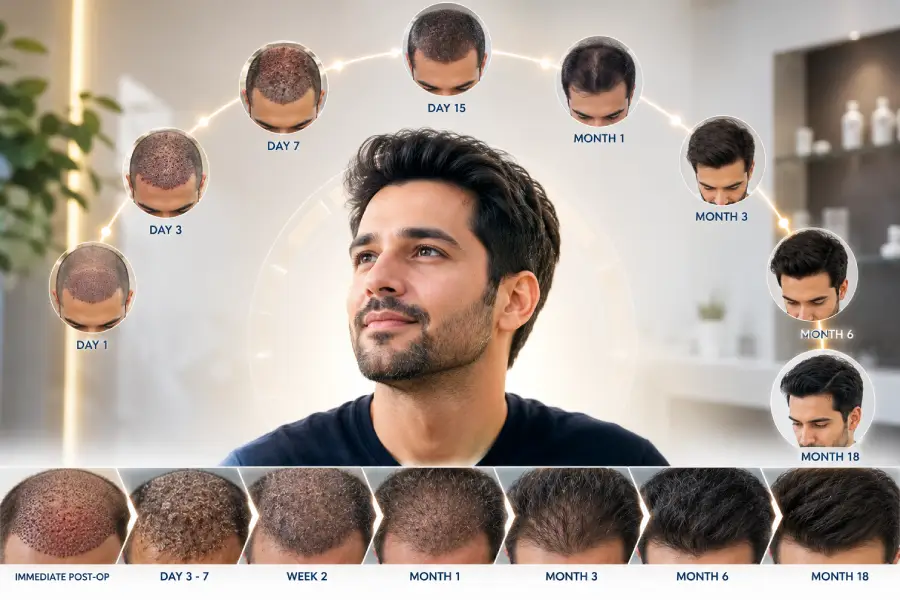
One of the biggest misconceptions about hair transplantation is that the results appear immediately after the procedure. In reality, a hair transplant is a journey, not an overnight transformation.
Many patients are surprised to learn that transplanted hair often sheds before it grows, visible results can take several months to appear, and the final outcome may not be fully evident until 12 to 18 months after the procedure. Understanding this timeline can help reduce anxiety, set realistic expectations, and ensure a smoother recovery experience.
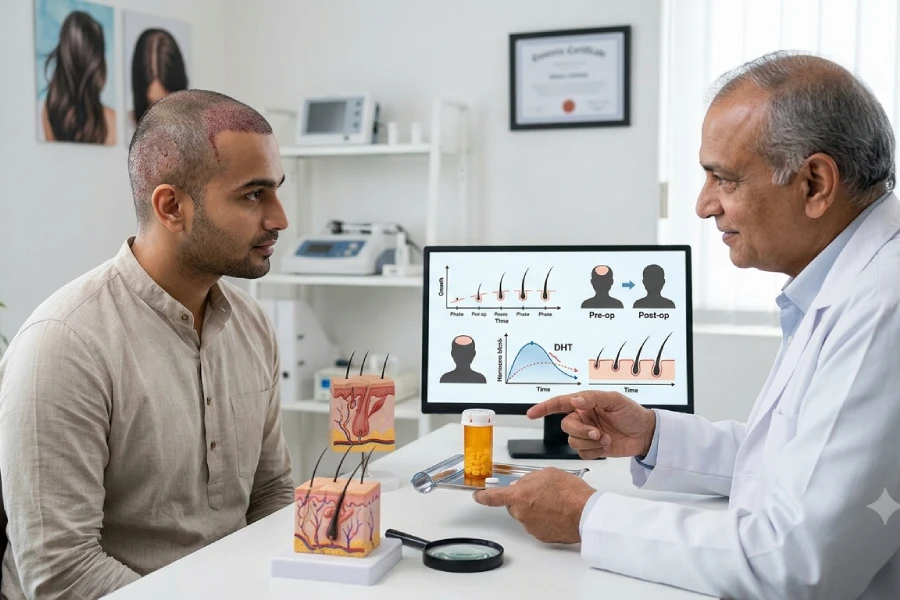
At Harleys Hair Transplant Clinic, one of the most common concerns patients discuss with Dr. Sumit Agrawal after their procedure is whether their recovery is progressing normally. Questions about shedding, slow growth, patchiness, density, and healing are all completely natural. The good news is that most of these changes are expected parts of the hair restoration process.
This blog will help you understand the complete hair transplant recovery timeline from Day 1 to Month 18, so you know exactly what to expect at every stage of your hair growth journey.
What Happens in the First 0–7 Days After Hair Transplant?
The first week is primarily focused on healing.
Immediately after the procedure, tiny grafts are placed into the recipient area while the donor area begins recovering from the extraction process. Mild swelling, redness, tenderness, and scab formation are all normal during this period.
During the first week, patients can typically expect:
- Mild redness around transplanted grafts
- Small scabs forming around each graft
- Slight swelling around the forehead or scalp
- Tightness or discomfort in the donor area
- Gradual healing of the recipient area
The most important goal during this stage is protecting the newly implanted grafts and carefully following post-operative instructions.
What Should You Expect in Weeks 2–4 weeks (Scabs, Shedding & Shock Loss)
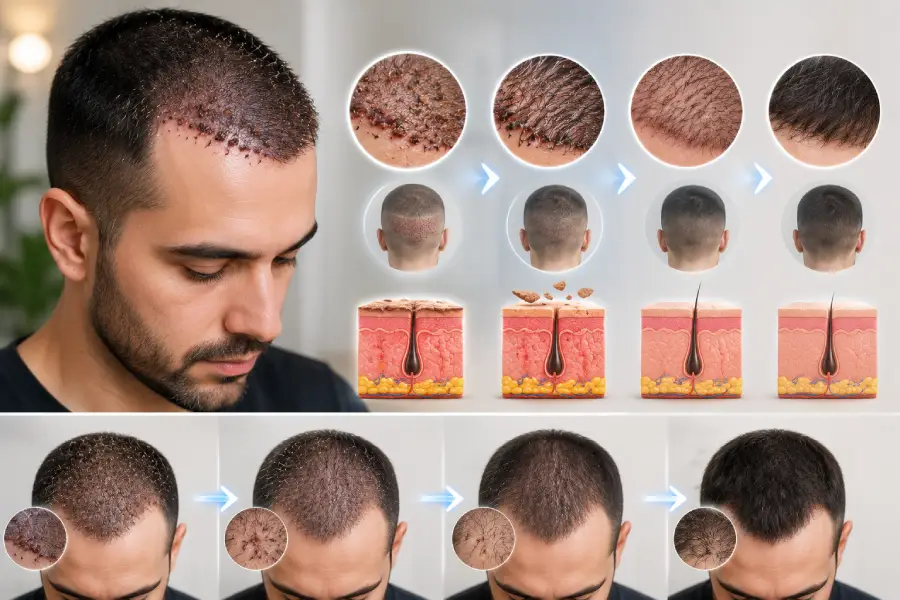 By the second week, most visible signs of surgery begin improving.
The scabs gradually fall away, redness continues to fade, and the transplanted area starts looking more natural. However, many patients experience something unexpected during this period: shock loss.
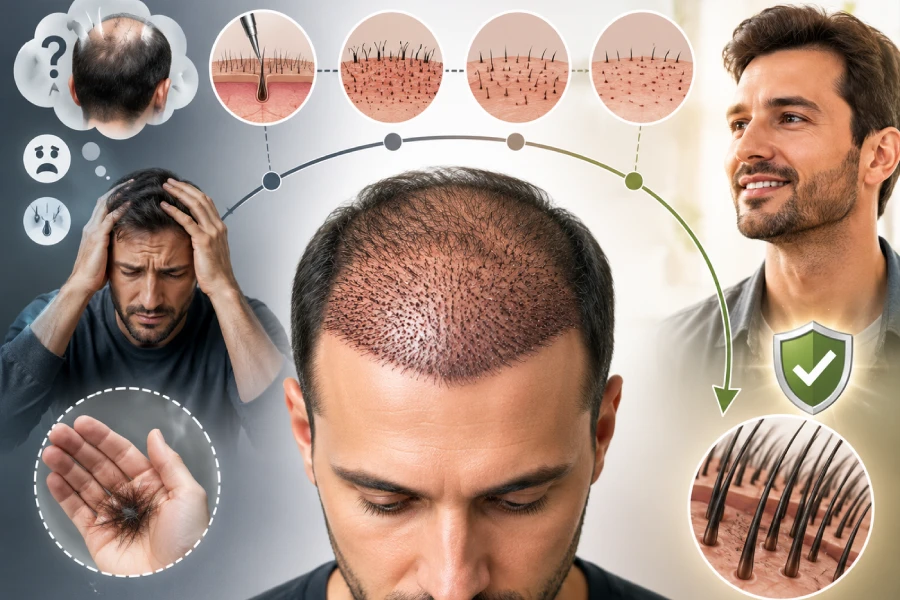
Shock loss refers to the temporary shedding of transplanted hairs.
This often causes concern because patients assume the grafts have failed. In reality, only the hair shafts shed; the follicles remain safely implanted beneath the skin.
Common experiences during this stage include:
- Scabs disappearing
- Reduction in redness
- Temporary shedding of transplanted hairs
- Early signs of donor area recovery
This phase is completely normal and often marks the beginning of the actual growth cycle.
What Happens in Month 1–2? (The Quiet or Dormant Phase)
For many patients, this is the most psychologically challenging stage.
The transplanted hairs have largely shed, but new growth has not yet begun. As a result, the scalp may appear similar to how it looked before the procedure.
Patients often wonder:
"Has my transplant worked?"
The answer is usually yes.
The follicles remain healthy beneath the skin and are simply transitioning into a resting phase before beginning a new growth cycle.
During this stage:
- Visible growth is minimal
- The scalp continues healing internally
- Hair follicles remain dormant
- Patience becomes essential
This phase can feel uneventful, but significant biological activity is taking place beneath the surface.
What Happens in Month 3–4? (Early Growth Stage)
This is when excitement typically begins returning.
The first new hairs start emerging from the transplanted follicles. These hairs are often:
- Fine
- Thin
- Soft
- Uneven in growth
Some areas may appear to grow faster than others, creating irregular or unequal growth.
This is completely normal.
At this point, patients are seeing evidence that the transplanted follicles have successfully established themselves and entered the growth phase.
What Happens in Month 5–6? (Visible Transformation Begins)
Months five and six are often considered the first major milestone in hair transplant recovery.
Growth becomes more noticeable, and patients begin seeing visible cosmetic improvement.
Common changes include:
- Increased hair coverage
- Better hairline definition
- Improved density
- More consistent growth patterns
Many patients feel significantly more confident during this stage because friends and family often begin noticing the results.
However, the hair is still maturing, and the final outcome is still months away.
What Happens in Month 7–9? (Density Build-Up Phase)
This is where the transformation becomes increasingly obvious.
The transplanted hair continues thickening and becoming more substantial.
During this phase, patients generally experience:
- Increased density
- Stronger hair shafts
- Better blending with native hair
- Improved styling options
The hairline begins looking more natural, and previously sparse areas become fuller.
Most patients are able to appreciate a significant portion of their eventual results by this point.
What Happens in Month 10–12? (Major Density & Texture Improvement
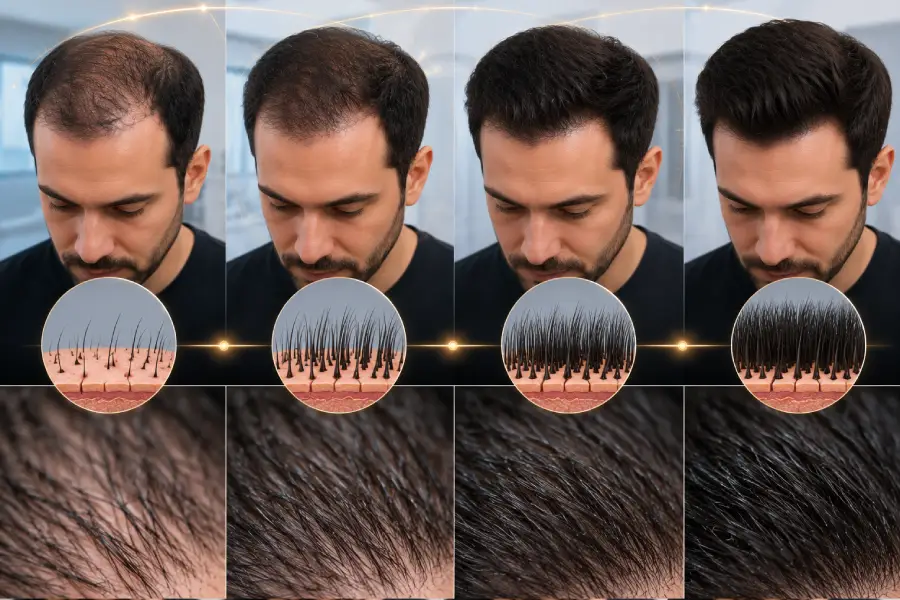
The one-year mark is a major milestone in hair restoration.
By Month 10 to Month 12, patients usually notice:
- Significant density improvements
- Better hair texture
- More natural hair movement
- Fuller appearance across treated areas
The transplanted hair starts behaving more like natural hair and becomes easier to style.
For many patients, approximately 80–90% of the final result is visible around this stage.
What Happens in Month 12–18? (Final Mature Hairline & Full Result)
While many patients are thrilled with their results at 12 months, the maturation process often continues.
Between Month 12 and Month 18:
- Hair shafts continue thickening
- Texture improves further
- Hair becomes more natural in appearance
- Crown areas often continue developing
- The final hairline becomes fully refined
This is when patients typically see the complete outcome of their hair transplant.
The result is not just more hair—but hair that looks and feels naturally theirs.
How Do FUT and FUE Recovery Timelines Differ?
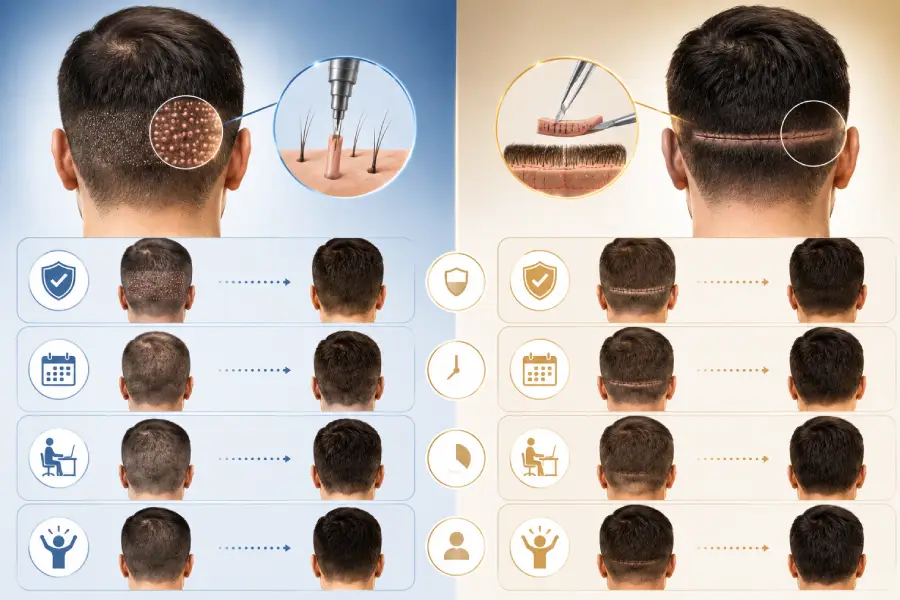 Both FUT and FUE follow a similar hair growth timeline, but there are differences in the healing process.
FUE Recovery
Patients often experience:
- Faster donor area healing
- Minimal scarring
- Reduced post-operative discomfort
- Earlier return to routine activities
FUT Recovery
Patients may experience:
- Slightly longer donor area healing
- Temporary tightness due to stitches
- Longer scar maturation period
Despite these differences, the timeline for new hair growth and final results is generally similar for both techniques.
What Factors Influence The Growth Speed and Final Results?
Every patient's recovery journey is unique.
Several factors influence how quickly hair grows and how the final results develop.
These include:
Age
Younger patients may experience faster healing and recovery.
Genetics
Natural hair characteristics affect density and growth patterns.
Donor Hair Quality
Stronger donor hair often contributes to better outcomes.
Surgical Technique
Proper graft handling and placement significantly impact growth rates.
Overall Health
Nutrition, sleep, stress levels, and lifestyle habits can influence recovery.
Post-Operative Care
Following aftercare instructions plays a crucial role in maximizing results.
How Can You Maximize Your Hair Growth After Transplant?
While the body controls much of the growth process, patients can support recovery by:
- Following all post-operative instructions
- Attending scheduled follow-up appointments
- Maintaining a healthy diet
- Staying hydrated
- Avoiding smoking
- Protecting the scalp from excessive sun exposure
- Taking medications or treatments recommended by the surgeon
Consistency during recovery often contributes to the best long-term outcomes.
When Should You Contact Your Hair Transplant Surgeon?
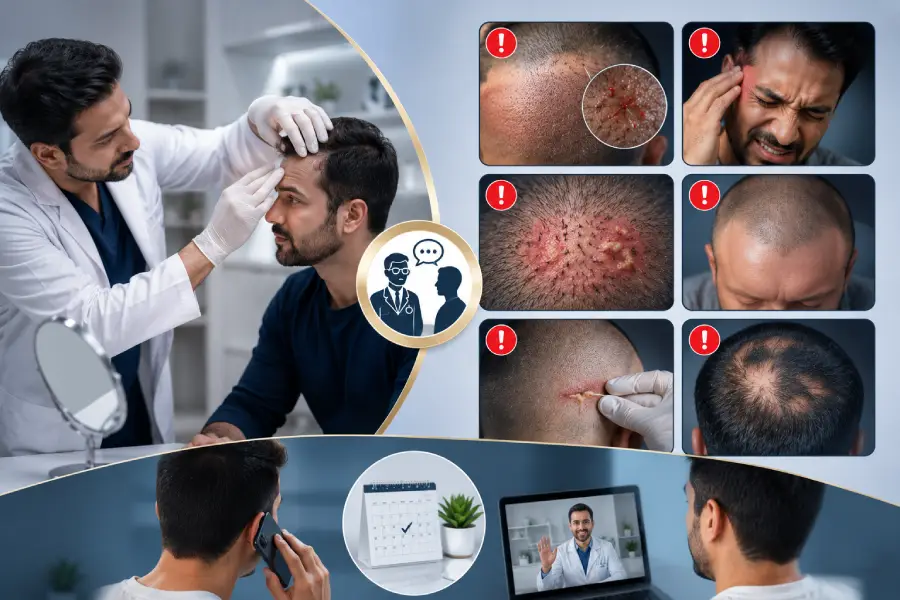
Most changes during recovery are completely normal.
Temporary shedding, redness, mild swelling, itchiness, and uneven growth are typically expected parts of the process.
However, patients should contact their surgeon if they experience:
- Persistent bleeding
- Severe pain
- Signs of infection
- Excessive swelling
- Pus formation
- Sudden graft loss
- Any unusual symptoms causing concern
At Harleys Hair Transplant Clinic, Dr. Sumit Agrawal encourages patients to maintain open communication throughout their recovery journey. Regular follow-ups help ensure that healing is progressing as expected and allow any concerns to be addressed promptly. Often, reassurance from an experienced surgeon can make a significant difference during the various stages of recovery.
Understanding the Journey Makes the Results More Rewarding
Hair transplant recovery is a gradual process that unfolds over several months. Every stage—from shedding and dormancy to growth and maturation—plays an important role in achieving natural, long-lasting results.
Understanding what to expect can make the journey far less stressful and help patients stay confident during periods when visible progress seems slow.
If you're considering a hair transplant or want expert guidance about recovery expectations, a consultation with an experienced specialist can provide valuable clarity. At Harleys Hair Transplant Clinic, Dr. Sumit Agrawal takes a personalized approach to hair restoration, helping patients understand not only the procedure itself but also the complete recovery journey that leads to successful, natural-looking outcomes.
 +91 9967333879