Medically Reviewed by Dr. Sumit Agrawal | Published on Jul, 16 2026
Hair Transplant vs GFC Therapy: Which Is Right for Your Hair Loss Stage?
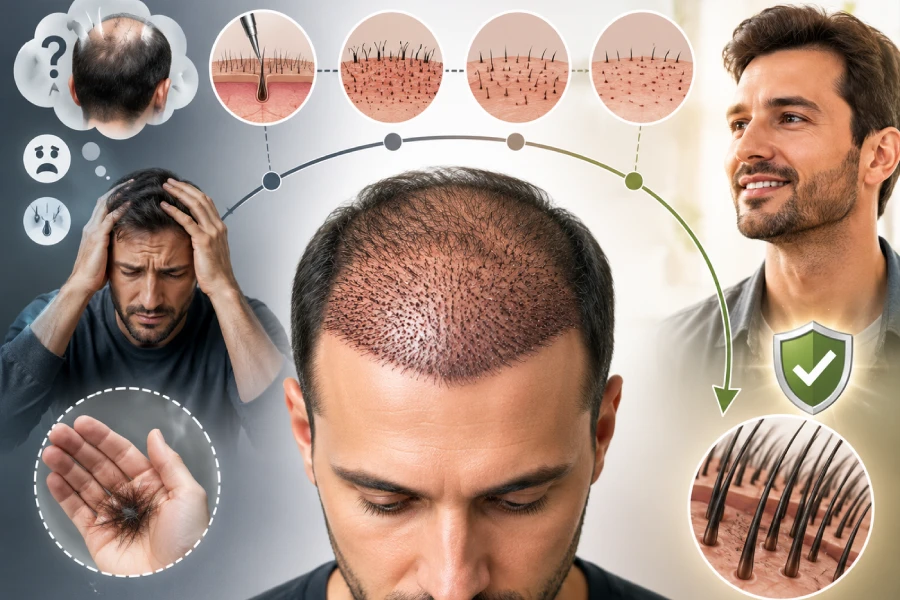
Hair loss rarely happens overnight. It usually begins subtly—a few extra strands on your pillow, a widening part, a receding hairline, or thinning at the crown. Many people dismiss these early signs until the hair loss becomes noticeable enough to affect their confidence. By then, one question often arises: Should you opt for GFC therapy or is it time for a hair transplant?
The answer isn't about choosing the "better" treatment - it is about choosing the right treatment for your stage of hair loss.
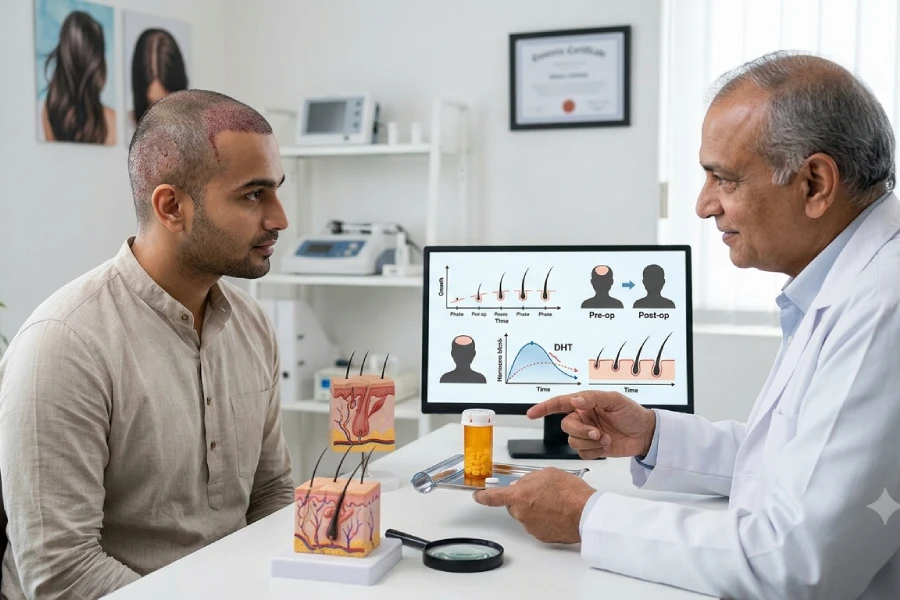
At Harleys Hair Transplant Clinic, which is considered the best hair transplant clinic in Mumbai, Dr. Sumit Agrawal believes that every patient deserves a treatment plan based on scientific evaluation rather than trends. As one of the most experienced hair restoration specialists, he carefully assesses the extent of hair loss, scalp health, donor area, age, and future progression before recommending either Growth Factor Concentrate (GFC) Therapy, a hair transplant, or a combination of both.
Understanding the difference between these treatments, and more importantly, knowing when each is appropriate, can help you make an informed decision for long-lasting results.
Understanding Hair Loss: Why the Stage Matters
Hair loss is a progressive condition. In most men, it follows male pattern baldness, while women generally experience diffuse thinning across the scalp. The follicles gradually shrink due to genetic and hormonal influences, producing finer, weaker hair until they eventually stop growing altogether.
This progression is important because different treatments work at different stages.
Simply put:
- Hair follicles that are alive but weak can often be revived.
- Hair follicles that have permanently disappeared cannot be regenerated and usually require transplantation.
This is why a proper diagnosis by an experienced hair restoration surgeon is essential before beginning any treatment.
What Is GFC Therapy?
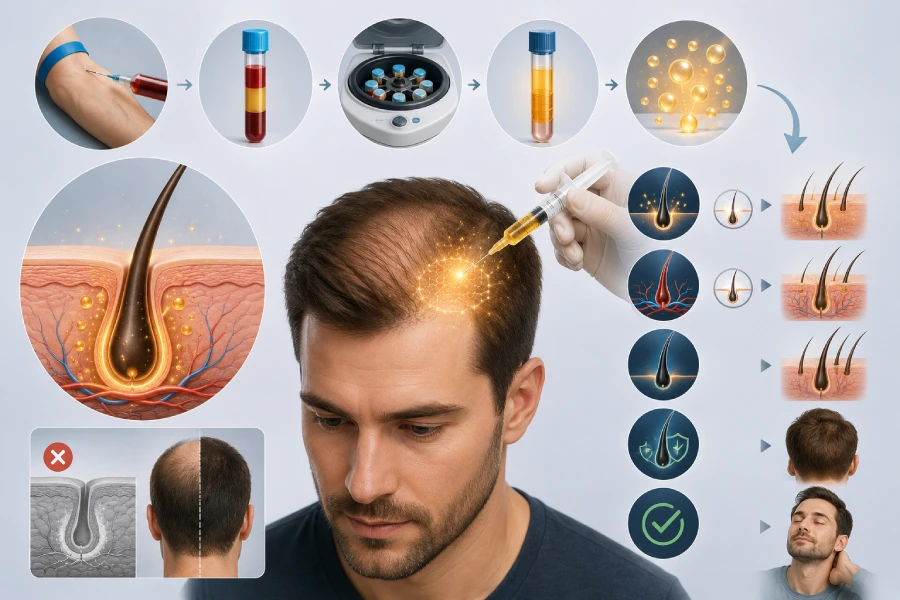
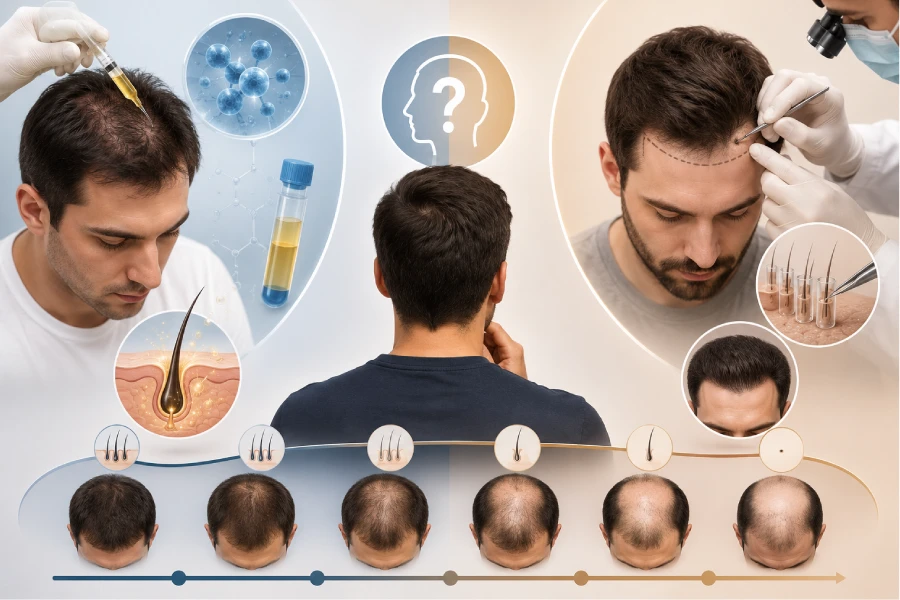
Growth Factor Concentrate (GFC) Therapy is an advanced regenerative treatment that uses concentrated growth factors derived from your own blood to stimulate dormant hair follicles.
The procedure involves collecting a small blood sample, separating highly concentrated growth factors, and injecting them into areas experiencing thinning.
These growth factors help:
- Stimulate inactive hair follicles
- Improve blood circulation around follicles
- Increase hair thickness
- Reduce hair fall
- Improve overall scalp health
Since GFC uses your own biological material, it is considered safe with minimal risk of allergic reactions.
However, one important limitation remains, it cannot grow hair where follicles have already been permanently lost.
Hair Loss Happens in Stages: Which Treatment Works Best?
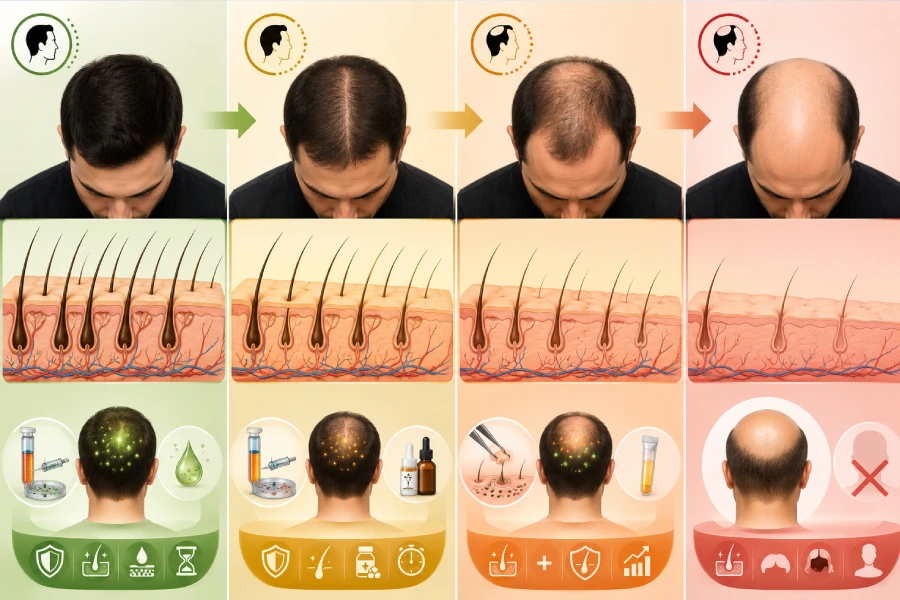
The success of any hair restoration treatment depends largely on the stage of hair loss.
Stage 1: Early Hair Fall
This stage usually includes:
- Increased daily hair shedding
- Mild reduction in hair density
- No visible bald patches
- Healthy hairline
At this point, most follicles are still alive.
Best Treatment
GFC Therapy is usually the preferred option because it strengthens existing follicles before permanent damage occurs.
Benefits include:
- Reduced hair fall
- Improved hair quality
- Better scalp nutrition
- Delayed progression of hair loss
Stage 2: Noticeable Hair Thinning
Symptoms include:
- Visible scalp under bright lighting
- Widening partition in women
- Mild temple recession in men
- Reduced hair volume
Many follicles are weakened but remain active.
Best Treatment
GFC Therapy continues to be highly effective during this phase. Depending on the severity, your doctor may combine it with medications and topical treatments to maximize results.
Early intervention during this stage often delays the need for surgery.
Stage 3: Advanced Thinning
Hair density has reduced significantly.
You may notice:
- Clearly visible scalp
- Crown thinning
- Deepening hairline recession
- Larger thinning zones
Some follicles remain active while others have become permanently inactive.
Best Treatment
This stage often requires a personalized approach.
Many patients benefit from:
- Hair transplant for bald areas
- GFC Therapy to preserve surrounding native hair
This combination creates fuller, more natural-looking results while slowing future progression.
Stage 4: Established Baldness
At this stage:
- Large bald patches develop
- Hair follicles have permanently disappeared
- Regenerative therapies alone cannot restore density
Best Treatment
A hair transplant becomes the primary solution.
Once new follicles are implanted, GFC Therapy may be recommended afterward to support healing, improve graft survival, and strengthen existing hair.
How Do You Know Which Hair Loss Stage You're In?
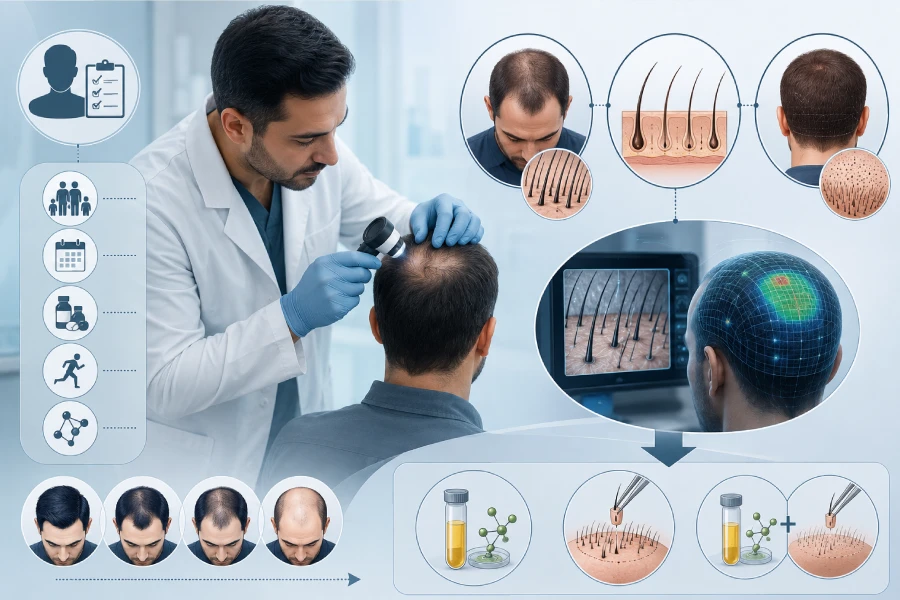
Many people underestimate or overestimate their hair loss.
A professional consultation typically includes:
Medical History
Your doctor evaluates:
- Family history
- Duration of hair loss
- Previous treatments
- Lifestyle factors
- Hormonal influences
Scalp Examination
The scalp is examined for:
- Hair density
- Miniaturized follicles
- Active hair loss
- Donor area quality
Hair Mapping
High-resolution scalp imaging helps determine whether follicles are dormant or permanently lost.
This assessment plays a crucial role in deciding whether GFC Therapy, a hair transplant, or a combination of both will provide the best outcome.
Hair Transplant vs GFC Therapy: Detailed Comparison
| Feature |
GFC Therapy |
Hair Transplant |
| Best For |
Early to moderate hair thinning |
Moderate to advanced baldness |
| How It Works |
Stimulates existing follicles using growth factors |
Transfers healthy follicles to bald areas |
| Suitable Hair Loss Stage |
Stage 1–2 and selected Stage 3 |
Stage 3–4 |
| Restores Lost Hair? |
No |
Yes |
| Prevents Further Hair Loss |
Yes |
Only transplanted hair remains permanent; existing hair may still need maintenance |
| Hair Density Improvement |
Mild to moderate |
Significant |
| Procedure Type |
Non-surgical |
Surgical |
| Downtime |
Minimal |
Usually 5–10 days for initial recovery |
| Number of Sessions |
Multiple sessions |
Usually one major procedure (additional sessions only if required) |
| Pain Level |
Mild |
Local anaesthesia ensures minimal discomfort |
| Results Become Visible |
2–4 months |
Initial growth in 3–4 months, fuller results in 10–12 months |
| Maintenance |
Periodic sessions may be required |
Existing natural hair may still need supportive treatments |
| Ideal Candidate |
People with active follicles |
People with permanent hair loss |
| Long-Term Outcome |
Helps preserve natural hair |
Provides permanent restoration in transplanted areas |
Can GFC Therapy and Hair Transplant Be Combined?
Absolutely.
Many patients achieve the best outcomes when both treatments are strategically combined.
For example:
- GFC Therapy before surgery can improve scalp health.
- After transplantation, GFC can support healing and enhance graft survival.
- It also helps preserve native hair surrounding the transplanted area, resulting in a fuller and more balanced appearance over time.
Rather than viewing these treatments as competitors, they are often complementary when recommended at the appropriate stage.
Why Early Treatment Makes a Difference
One of the biggest misconceptions about hair loss is waiting until the condition becomes severe.
The earlier you seek professional advice, the more treatment options you have.
Early intervention can:
- Preserve existing hair
- Slow future hair loss
- Reduce the extent of surgery needed later
- Deliver more natural-looking outcomes
- Improve long-term hair density
This is why timely consultation is just as important as choosing the right treatment.
Why Choose Harleys Hair Transplant Clinic?
At Harleys Hair Transplant Clinic, Dr. Sumit Agrawal takes a patient-first approach by recommending treatments based on your unique pattern of hair loss rather than a one-size-fits-all solution. Whether you need GFC Therapy to strengthen existing follicles or a carefully planned hair transplant to restore permanent hair growth, every treatment plan is designed with long-term results in mind.
Known for advanced techniques, natural-looking hairline design, and personalised care, Harleys has earned its reputation among patients seeking the best hair transplant clinic in Mumbai. Under the guidance of Dr. Sumit Agrawal, widely recognised by patients for his precision, experience, and commitment to ethical treatment planning, you receive care from one of the best hair transplant surgeons in Mumbai.
If you're unsure whether your hair loss requires GFC Therapy, a hair transplant, or a combination of both, the first step is a professional consultation. An early diagnosis can preserve your existing hair, prevent unnecessary treatments, and help you achieve healthier, fuller, and more natural-looking results with a personalised treatment plan.
 +91 9967333879